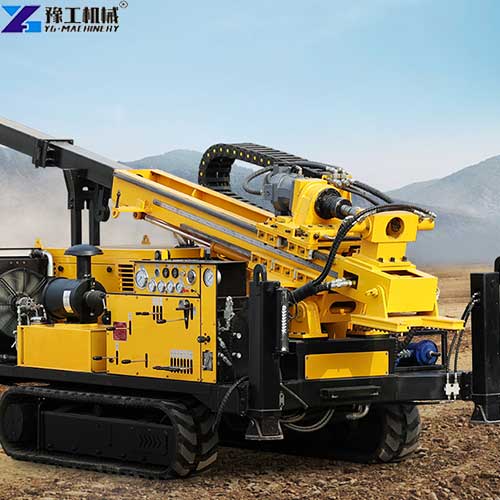
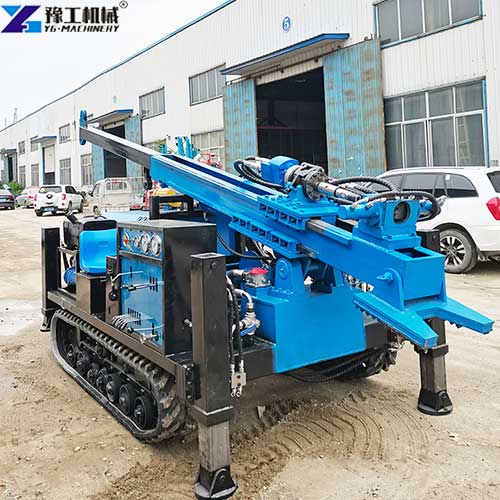
During mineral exploration and geological drilling, few problems are more frustrating than a drill string suddenly getting stuck underground. The drilling may be going well, the core may be coming out normally, and then the rotation or feeding movement becomes difficult. In serious cases, the drill pipe cannot move up or down at all.
This situation is commonly called stuck drilling, stuck pipe, or drill rod jamming.
For drilling contractors, knowing how to deal with a stuck drill is just as important as knowing how to operate the machine. If the problem is handled incorrectly, the drill rod, core barrel, drilling tools, or even parts of the machine may be damaged.
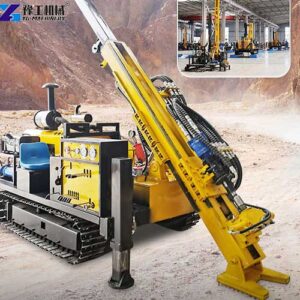
A full hydraulic core drilling machine gives operators good control over drilling, feeding, lifting, and other operations, but even a powerful machine cannot completely prevent sticking. The key is to understand why it happens, recognize the warning signs early, and use the correct recovery method.
In this guide, YG will explain the common causes of stuck drilling, what operators should do step by step, and what mistakes to avoid, etc. Want to know more details? Please contact YG.
Get Your Free Quote in 12 Hours – No Obligation
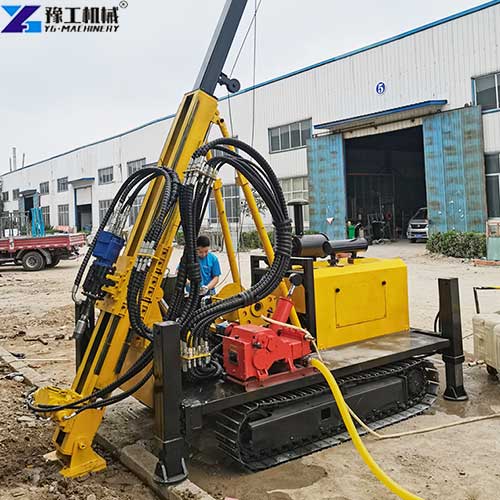
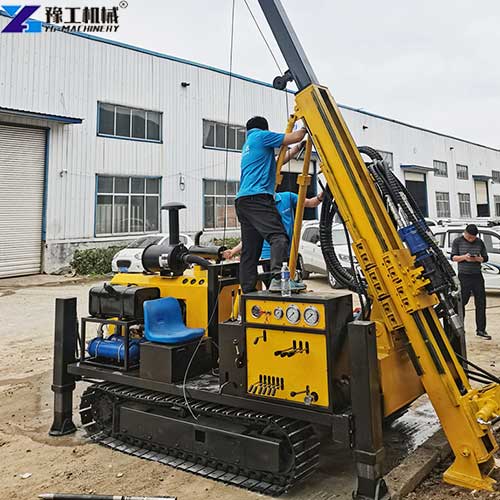
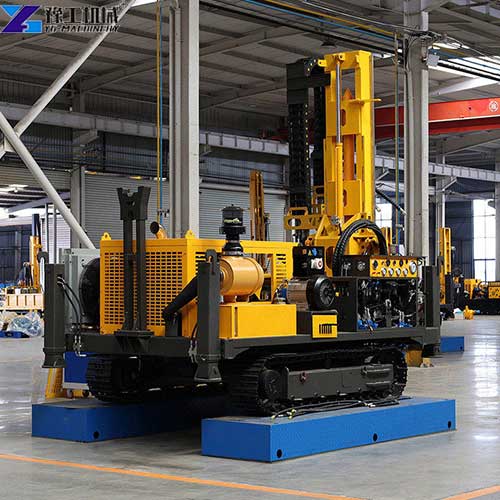
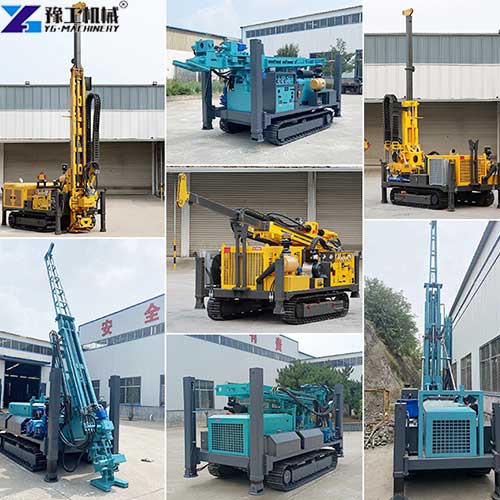
Parameters of Full Hydraulic Core Drilling Machine
| Model | YGX-400 | YGX-600 | YGX-800 | YGX-1000 |
| Drilling Depth(M) | 180-400-500 | 200-600-650 | 400-800-1000 | 500-1000-1100 |
| Rated pressure(MPA) | 21 | 21 | 25 | 28 |
| Rated Flow(L/min) | 168 | 192 | 260 | 300 |
| Heat Dissipation Mode | Air cooling+water cooling | |||
| Engine Brand | Yuchai | Yuchai | Yuchai | Cummins |
| Rated power/speed | 78kW/ 2400r/min | 92kW/ 2400r/min | 92kW/ 2400r/min | 154kW/2400r/min |
| Drilling Angle(°) | 0-90 | 45-90 | 45-90 | 45-90 |
| Lifting Force(T) | 12 | 16 | 24 | 30 |
| Feed Force(T) | 6 | 8 | 12 | 15 |
| Hydraulic Mud pump flow | 30-90(L/min) | 30-90(L/min) | 90-180(L/min) | 90-180(L/min) |
| Hydraulic Mud pump power | 4-7(MPA) | 4-7(MPA) | 4-7(MPA) | 4-7(MPA) |
| Dimension | 4000*1900*1800mm | 4000*2000*1800mm | 5500*2100*2000mm | 6000*2200*2400mm |
| Weight | 4.3T | 4.5/5.5T | 6.5T | 7.5T |
Get Your Free Quote in 12 Hours – No Obligation
What Does “Stuck” Mean in Core Drilling?
Before discussing solutions, let’s first understand what happens when a drill gets stuck.
During core drilling, the drill string travels deep into the ground while the drilling bit cuts through rock. Water or drilling fluid is normally used to cool the bit, remove cuttings, and help maintain proper drilling conditions.
Under normal conditions, the operator can:
- Rotate the drill string
- Feed the drill string downward
- Pull the drill string upward
- Recover the core
- Continue drilling
When the drill becomes stuck, one or more of these movements becomes difficult or impossible.
For example:
- The drill rod cannot be pulled out.
- The drill string cannot move downward.
- Rotation becomes very difficult.
- Hydraulic pressure rises suddenly.
- The bit appears to be locked in the hole.
- The drill rod vibrates heavily.
- The core barrel cannot be recovered normally.
A stuck drill does not always mean the equipment is broken.
In many cases, the problem starts underground because of geological conditions or drilling practices.
Get Your Free Quote in 12 Hours – No Obligation
Why Does a Full Hydraulic Core Drilling Machine Get Stuck?
There is no single cause of stuck drilling.
Different formations and drilling conditions can create different problems.
Here are some of the most common causes.
Fractured rock is one of the major challenges in core drilling.
When the formation contains many cracks, the rock around the borehole may break and fall into the hole.
Small pieces can accumulate around the drill string.
Eventually, the drill rod may have difficulty moving.
The operator may notice:
- Increasing drilling resistance
- Unusual vibration
- Reduced drilling speed
- Difficult rod movement
- Higher hydraulic pressure
If these signs appear, continuing to force the drill can make the situation worse.
Some geological formations are unstable.
After the drill passes through the formation, the hole wall may partially collapse.
Loose material can then fall around the drill string and trap it.
This is particularly difficult because the operator may not be able to see the problem from the surface.
A hydraulic coring machine therefore needs to be operated according to the actual formation rather than using the same drilling settings for every hole.
Water circulation plays an important role in core drilling.
It can help:
- Cool the drill bit
- Remove rock cuttings
- Clean the hole
- Reduce friction
- Carry debris out of the borehole
If circulation becomes weak or stops, cuttings may remain in the hole.
The debris can accumulate around the drill string and increase the risk of sticking.
Possible causes include:
- Blocked water passages
- Insufficient water supply
- Pump problems
- Leakage
- Formation loss
- Incorrect drilling conditions
If the return flow suddenly changes, the operator should pay attention.
Faster is not always better.
Some operators may try to increase feed pressure to improve drilling speed.
But if the formation does not allow aggressive drilling, excessive pressure can create problems.
For example, the drill bit may produce too much material for the circulation system to remove.
The hole can become crowded with cuttings.
The result may be increased resistance and eventually a stuck drill string.
A full hydraulic core drilling rig provides adjustable hydraulic control, but the operator still needs to select reasonable drilling parameters according to the formation.
Core blocking is another possible cause.
When the core inside the barrel becomes stuck or packed, drilling may continue without normal core movement.
This can create additional resistance.
If the operator continues drilling without recognizing the problem, the drill string may become harder to move.
Typical warning signs can include:
- Sudden change in drilling pressure
- Change in penetration behavior
- Abnormal vibration
- Poor core recovery
- Unusual water return
Good operators learn to recognize these changes early.
A worn or damaged drill bit can also cause abnormal drilling behavior.
A drill bit that is no longer working properly may require more pressure to maintain penetration.
This can increase the load on the drilling system.
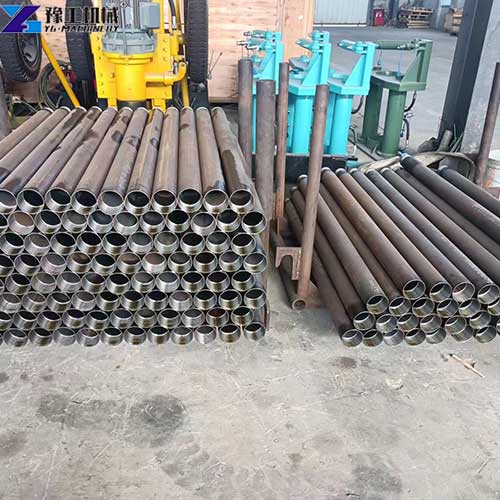
Damaged or bent drill rods can create another problem.
A bent rod may rub against the borehole wall and become difficult to move.
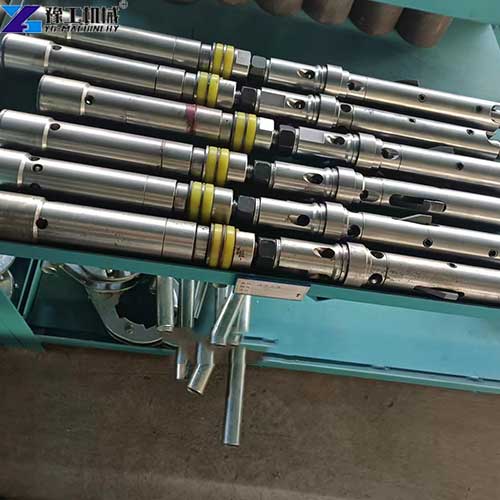
Therefore, drill tools and rods should be inspected regularly.
Get Your Free Quote in 12 Hours – No Obligation
What Should You Do When the Drill Gets Stuck?
The first rule is simple:
Don’t panic, and don’t immediately use maximum force.
A powerful full hydraulic core drilling machine can generate substantial force, but using excessive force without understanding the cause can damage equipment.
Instead, follow a controlled process.
When the drill becomes difficult to move, stop aggressive drilling.
Check:
- Hydraulic pressure
- Rotation condition
- Feed movement
- Water circulation
- Drilling sound
- Drill rod vibration
- Return water
- Recent geological changes
Ask yourself:
What changed just before the drill became stuck?
This question can provide a useful clue.
For example, if the drill became stuck immediately after entering fractured rock, formation collapse may be involved.
If water circulation suddenly disappeared, the problem may involve the circulation system or formation conditions.
One of the most common mistakes is simply increasing pressure.
The operator may think:
“If the machine pulls harder, the rod will come out.”
Sometimes that works.
But sometimes it makes the situation much worse.
Excessive force can potentially damage:
- Drill rods
- Drill threads
- Drill bits
- Core barrels
- Hydraulic components
- Connections
Therefore, don’t immediately operate at maximum force.
First determine why the drill is stuck.
Depending on the situation, the operator may carefully try small movements rather than one large movement.
This can involve controlled:
- Rotation
- Lifting
- Feeding
- Pressure adjustment
The exact recovery method depends heavily on the drilling system, formation, rod type, depth, and cause of the jam.
The goal is to gradually release the drill rather than suddenly applying extreme force.
This is where the controllability of a hydraulic coring machine becomes valuable.
If water circulation has stopped or become abnormal, investigate it before continuing.
Check the:
- Pump
- Water line
- Connections
- Flow
- Pressure
- Return water
If the hole is not being cleaned properly, continued drilling may increase the amount of material around the drill string.
Restoring proper circulation may help improve the drilling condition.
Depending on the machine and drilling method, controlled reverse rotation or carefully reducing the drilling load may help release the tool.
However, this should be done according to the machine manufacturer’s operating instructions.
Operators should not randomly combine high rotation, high feed pressure, and high pulling force.
The recovery process should be controlled.
If the drill starts to move again, don’t immediately pull it out at maximum speed.
Continue monitoring:
- Hydraulic pressure
- Rod movement
- Rotation
- Water circulation
- Vibration
If resistance increases again, stop and reassess.
A drill that moves one meter and then becomes stuck again may indicate that the underlying problem has not been completely solved.
Get Your Free Quote in 12 Hours – No Obligation
When Should You Stop and Ask for Technical Help?
Not every stuck drill can be solved by the operator.
Stop and seek professional technical support if:
- The drill rod is completely locked
- Hydraulic pressure becomes abnormal
- A rod appears bent
- Threads may be damaged
- The drill bit may be broken
- The machine makes abnormal sounds
- There is hydraulic oil leakage
- The hole is very deep
- You are unsure about the cause
Trying to solve a serious underground problem with excessive force can turn a small drilling issue into an expensive equipment problem.
How Can You Prevent Stuck Drilling?
Solving the problem is important, but preventing it is even better.
Before drilling, make sure the water supply is ready.
During drilling, watch the return flow.
A sudden change can be an early warning that something is happening underground.
Don’t use the same settings for every geological condition.
Hard rock, fractured rock, loose formations, and other conditions may require different operating methods.
The operator should adjust the drilling process based on actual feedback from the hole.
High drilling speed sounds attractive, but drilling efficiency should be measured by the whole process.
A useful target is not:
“How fast can I drill?”
It is:
“How efficiently can I drill, recover good cores, protect my tools, and complete the hole?”
A slightly slower but stable drilling process can sometimes be more productive than aggressive drilling followed by a long recovery operation.
Before starting a new hole, inspect the equipment.
Pay attention to:
- Rod straightness
- Thread condition
- Bit condition
- Core barrel condition
- Connections
- Water passages
Replacing a worn component at the right time can help prevent a bigger problem underground.
Get Your Free Quote in 12 Hours – No Obligation
Customer Experience: Solving a Stuck Drill Problem
A drilling contractor was working on a mineral exploration project. The team was drilling normally when the drill string suddenly became difficult to lift. The operator first noticed that drilling resistance had increased. Instead of immediately increasing the pulling force, the team stopped and checked the drilling condition. They found that the formation had become more fractured than the previous section, and the water return had also changed. The operator reduced the aggressive drilling action, checked the circulation system, and carefully worked the drill string using controlled movement. After the drilling condition stabilized, the rod was gradually recovered. The customer later said that the most important lesson was not simply having a powerful machine. It was having good control and knowing when to stop. The experience also reminded the team to pay closer attention to changes in drilling pressure, water return, vibration, and core recovery. That is an important lesson for every drilling contractor.
Looking for a reliable drilling partner? Choose YG
A stuck drill is a normal risk that drilling contractors may face, especially when working in fractured, unstable, or changing geological formations.
The most important thing is to respond correctly.
Stop → check the symptoms → check circulation → reduce unnecessary force → use controlled movement → recover carefully → ask for technical support when necessary.
A good full hydraulic core drilling machine can provide strong and flexible drilling performance, but the operator’s judgment remains essential.
Looking for a reliable drilling partner? Choose YG as your supplier. YG can help you select a suitable full hydraulic core drilling machine and provide the support you need for more stable, efficient, and confident drilling.