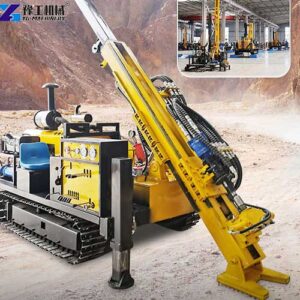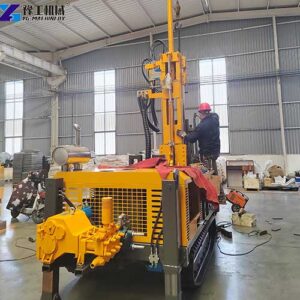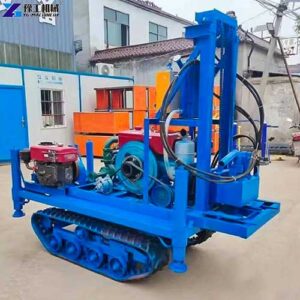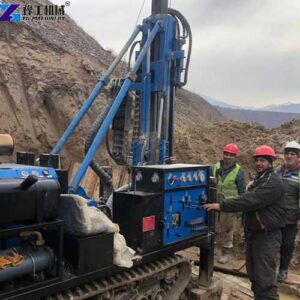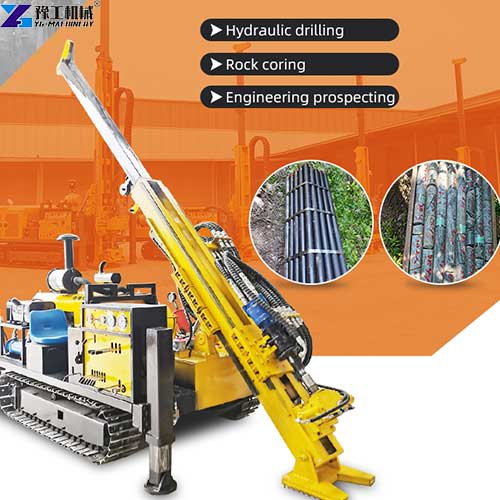
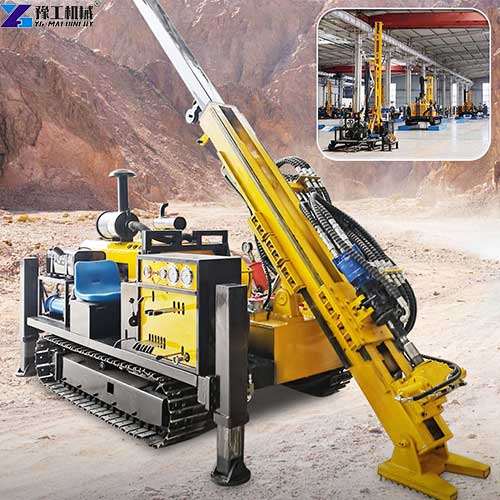
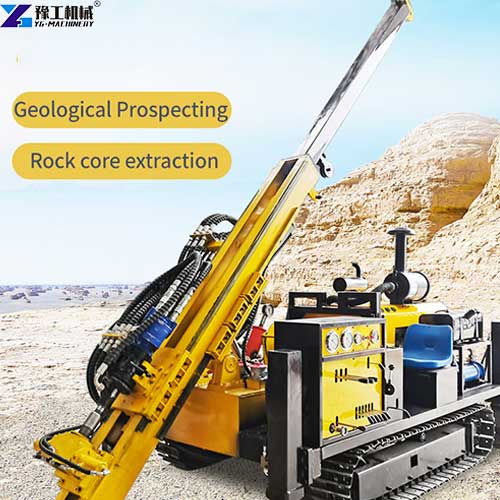
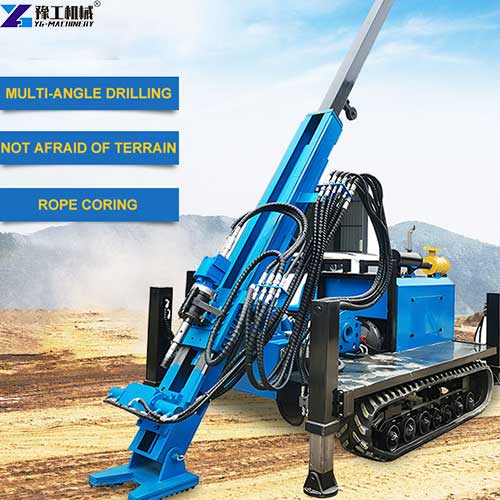
A crawler full hydraulic core drilling rig can use several wireline core retrieval sizes, including BTW, BQ, NTW, NQ, HTW, and HQ. These methods use matching core barrels, drill bits, reamers, and drill rods to recover core samples from different formations and drilling requirements. Wireline core retrieval is important because it allows operators to recover the core without repeatedly pulling out the entire drill string. When the core barrel is full, the inner tube can be retrieved by a wireline tool, while the drill rods remain in the borehole. This can significantly reduce unnecessary tripping time and improve drilling efficiency, especially for deeper exploration projects.
However, many people are unclear about the different types of rope coring, or even think they are useless. YG invited Dr. Ricardo Mendoza, Mining Consultant, to explain the importance of choosing the right rope coring method and how to differentiate between NQ, BQ, and HQ rope coring methods through the following story. For more details, please contact WhatsApp: +86 139 3718 3205.
Want To Know More Details? Contact YG Machinery!
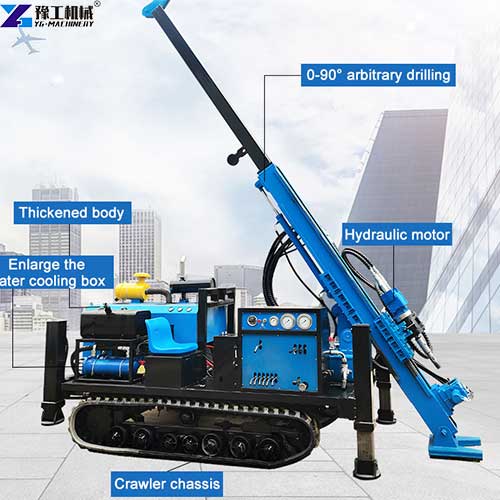
Full Hydraulic Core Drilling Rig Parameters
| Model | YGX-400 | YGX-600 | YGX-800 | YGX-1000 |
| Drilling Depth(M) | 180-400-500 | 200-600-650 | 400-800-1000 | 500-1000-1100 |
| Rated pressure(MPA) | 21 | 21 | 25 | 28 |
| Rated Flow(L/min) | 168 | 192 | 260 | 300 |
| Heat Dissipation Mode | Air cooling+water cooling | |||
| Engine Brand | Yuchai | Yuchai | Yuchai | Cummins |
| Rated power/speed | 78kW/ 2400r/min | 92kW/ 2400r/min | 92kW/ 2400r/min | 154kW/2400r/min |
| Drilling Angle(°) | 0-90 | 45-90 | 45-90 | 45-90 |
| Lifting Force(T) | 12 | 16 | 24 | 30 |
| Feed Force(T) | 6 | 8 | 12 | 15 |
| Hydraulic Mud pump flow | 30-90(L/min) | 30-90(L/min) | 90-180(L/min) | 90-180(L/min) |
| Hydraulic Mud pump power | 4-7(MPA) | 4-7(MPA) | 4-7(MPA) | 4-7(MPA) |
| Dimension | 4000*1900*1800mm | 4000*2000*1800mm | 5500*2100*2000mm | 6000*2200*2400mm |
| Weight | 4.3T | 4.5/5.5T | 6.5T | 7.5T |
Common Core Extraction Methods Parameters
| Specification | Drill Bit Outer Diameter (mm) | Core Diameter (mm) | Outer Diameter of the Reamer | Drill Pipe Outer Diameter |
| BTW | 60 | 42 | 60 | 56.3 |
| NTW | 75 | 56 | 75.8 | 75.3 |
| HTW | 95 | 71 | 96 | 91.5 |
| BQ | 59 | 36.4 | 60 | 55.6 |
| NQ | 75.7 | 47.6 | 75.8 | 69.9 |
| HQ | 96 | 63.6 | 96 | 88.9 |
Want To Know More Details? Contact YG Machinery!
The Phone Call from a Frustrated Mine Owner
Three years ago, I received a call from a copper mine operator in northern Chile that went something like this:
“We’ve been drilling exploration holes for eight months and our core recovery at depth is garbage. We’re pulling up crushed rock, twisted cores, and sometimes nothing at all. Our geologists can’t make sense of the data. I need you to figure out what we’re doing wrong.”
I flew up to the site the following week.
What I found was a textbook case of using the wrong drilling approach for the job.
The operation was running a truck-mounted hydraulic rig — perfectly fine for shallow, soft-ground work — but they were trying to push it to 500-meter depths in hard, fractured granite.
The rig didn’t have enough feed force to maintain stable bit pressure.
The core barrel system was conventional, or non-wireline, meaning every core run required pulling the entire drill string.
And they were using BQ-sized core barrels at depths where NQ would have been more appropriate.
Everything that could go wrong was going wrong.
And it wasn’t because the crew was inexperienced.
It was because the equipment and drilling method simply didn’t match the geological challenge.
Before explaining why the right rig matters, it is important to understand the core technology that changed this operation: wireline coring.
In conventional core drilling, when a core run is complete — for example, after every 3 meters — drilling stops and the entire drill string must be pulled out of the borehole.
At 500 meters depth, that’s roughly 160 drill rods.
The crew must:
- Pull the drill rods out.
- Retrieve the core.
- Remove the core from the barrel.
- Reassemble the drill string.
- Run the entire string back into the borehole.
- Start drilling again.
This can consume a significant amount of non-drilling time.
Wireline coring changes the process.
The drill string stays in the borehole.
Instead of pulling all the drill rods out, the operator lowers a wireline cable through the center of the drill string.
The cable connects to an inner core barrel assembly located inside the outer drill string.
When the core run is complete, the wireline retrieves only the inner barrel containing the core sample.
The operator then:
Retrieve Inner Barrel → Remove Core → Lower Empty Barrel → Continue Drilling
The drill rods remain in position throughout the process.
Wireline core retrieval can significantly reduce unnecessary tripping time, especially in deeper exploration holes.
According to this project experience, a typical wireline core retrieval at 600 meters could take approximately 20–30 minutes, compared with 2–3 hours for a conventional retrieval cycle.
The deeper the hole, the more valuable efficient wireline core retrieval becomes.
This was one of the main reasons the Chilean operation switched to a crawler full hydraulic core drilling rig with wireline capability. Wireline coring allows operators to recover the core without repeatedly pulling out the entire drill string.
Want To Know More Details? Contact YG Machinery!
Conventional Coring vs. Wireline Coring
| Feature | Conventional Coring | Wireline Coring |
|---|---|---|
| Drill string during core retrieval | Entire string is pulled | Drill string remains in hole |
| Core retrieval | Pull complete string | Retrieve inner barrel |
| Rod handling | High | Significantly reduced |
| Non-drilling time | Longer | Shorter |
| Deep-hole efficiency | More time-consuming | More efficient |
| Suitable application | Shallow/medium drilling | Particularly useful for deeper exploration |
Wireline coring is not simply about retrieving a core. It is about reducing unnecessary rod handling and keeping the drilling process moving.
Want To Know More Details? Contact YG Machinery!
BQ, NQ, HQ — What’s the Difference?
| Feature | BQ Core | NQ Core | HQ Core |
|---|---|---|---|
| Core Diameter | Approx. 36.4 mm | Approx. 47.6 mm | Approx. 63.6 mm |
| Drill Bit Outer Diameter | Approx. 59 mm | Approx. 75.7 mm | Approx. 96 mm |
| Drill Rod Outer Diameter | Approx. 55.6 mm | Approx. 69.9 mm | Approx. 88.9 mm |
| Typical Depth | Shallow to medium-depth, up to about 300 m | Medium to deep, about 300–800 m | Shallow to medium-depth |
| Typical Application | Fast drilling in hard rock where smaller core samples are acceptable | Mineral exploration requiring good core recovery and sufficient sample volume | Geotechnical studies, detailed mineralogical work, and applications requiring larger core samples |
| Main Advantage | Smaller drill bit and lower torque requirements | Good balance between core size, drilling force, and sample volume | Larger core provides more sample material |
| Core Sample Size | Smaller | Medium | Larger |
| Drilling Force Requirement | Relatively lower | Higher than BQ | Significantly higher |
| Torque Requirement | Relatively lower | Higher than BQ | Significantly higher |
| Best Suited For | Shallow/medium-depth hard-rock drilling | Medium/deep mineral exploration | Applications where large core samples are important |
| Main Consideration | Smaller core may limit detailed geological or structural analysis | Requires more torque than BQ, but provides better sample volume | Large drill bit and rod increase mechanical demands, especially at greater depth |
How Do You Choose the Right Core Size?
The decision comes down to three major factors.
1. Target Depth
For deeper exploration holes, the drilling system must balance core size with the required drilling force and torque.
2. Rock Hardness and Formation Conditions
Hard and fractured formations require stable drilling parameters and sufficient feed force.
3. Geological Information Required
If detailed geological analysis requires more sample material, a larger core size may be considered when the drilling equipment and formation conditions allow it.
For the Chilean project, the team was using BQ at approximately 400–500 meters.
The cores were too small for reliable structural logging, while the conventional retrieval system was making each core run painfully slow.
The recommendation was therefore:
Switch to NQ wireline coring and use a rig capable of handling the required depth and rock conditions.
Want To Know More Details? Contact YG Machinery!
The Client’s Experience — Six Months Later
The mine operator took my advice.
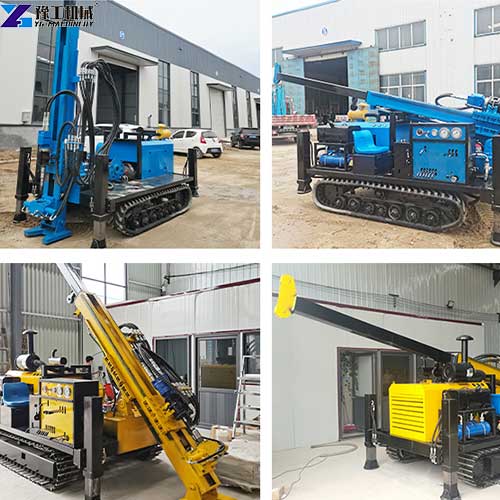
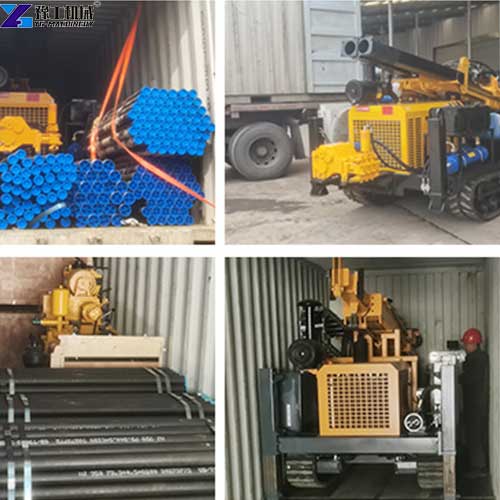
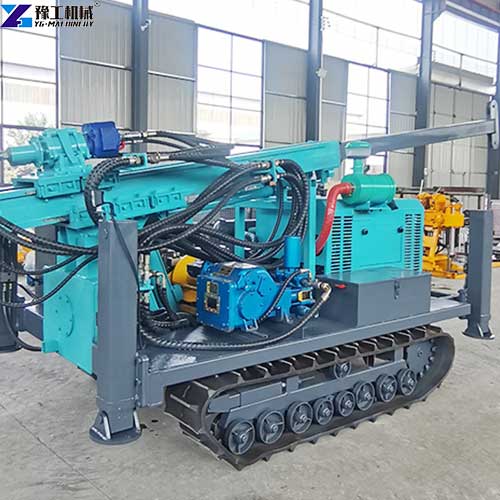
They procured a crawler full hydraulic core drilling rig from YG Machinery, configured with NQ wireline coring tools and sized for approximately 400–800 meter depth capability.
Here’s what happened over the following six months.
| Performance | Before | After |
|---|---|---|
| Core Recovery | 55% | 95%+ |
| 800 m Hole Completion | 20 working days | About 12 days |
| Hole-to-Hole Movement | 2–3 days | Less than 1 day |
| Core Retrieval Method | Conventional | NQ Wireline |
| Rig Configuration | Truck-mounted | Crawler Full Hydraulic |
What the Mine Owner Told at the Six-Month Review?
“For eight months we were drilling blind. We knew the copper was there, but we couldn’t prove it. Now we have continuous core from surface to 700 meters. Our geologists built a resource model that actually makes sense.”
He continued:
“We submitted it to the board last month, and they approved phase two expansion. This rig didn’t just improve our drilling — it changed the trajectory of the entire project.”
That’s the kind of outcome that makes consulting work worthwhile.
Want To Know More Details? Contact YG Machinery!
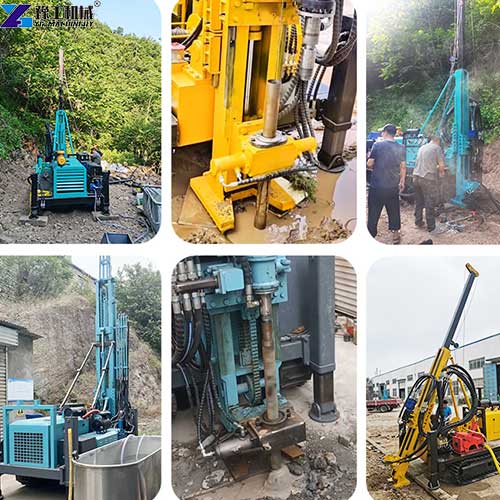
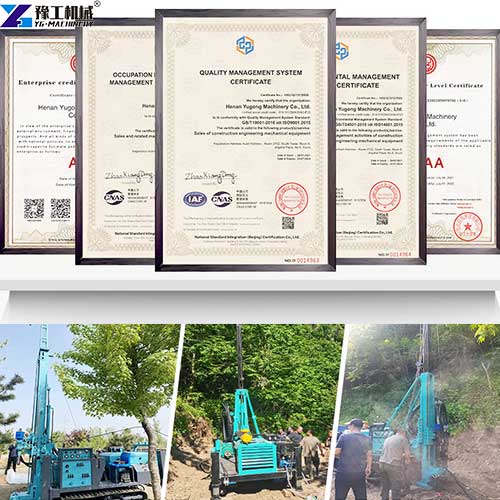
How to Evaluate a Hydraulic Core Drilling Rig for Your Operation? 6 Ways
If you’re facing a similar situation — deep holes, hard rock, fractured formations, or challenging terrain — there are several factors to consider when evaluating a hydraulic core drilling rig.
1. Crawler or Truck-Mounted Configuration
For rough terrain, slopes, or drilling locations spread across difficult ground, crawler mobility can be an important consideration.
2. Wireline Coring Capability
For deeper exploration holes, wireline coring can significantly reduce the amount of rod handling required during core retrieval.
3. Correct Core Barrel Size
Choose the core size according to your:
- Target depth
- Rock formation
- Required sample volume
- Geological analysis requirements
- Rig capacity
4. Sufficient Hydraulic Pressure and Feed Force
The drilling rig should be matched to the expected maximum drilling depth.
A machine designed for a lower depth range may not provide sufficient drilling capacity for significantly deeper holes.
5. Reliable Cooling System
Deep drilling in hard rock can generate significant heat.
A suitable cooling system helps the hydraulic and drilling components operate reliably during demanding drilling conditions.
6. Engine and Parts Support
For remote mining operations, engine reliability and access to replacement parts and technical support are also important considerations.
Unsure Which Core Extraction Method Is Right for You? Contact YG
Choosing the right full hydraulic core drilling rig, core barrel, and wireline system depends on your drilling depth, formation, terrain, and geological requirements.
YG Machinery can provide crawler-mounted hydraulic core drilling solutions for different exploration conditions.
Contact YG Machinery for a crawler-mounted full hydraulic core drilling rig and wireline core drilling solution.