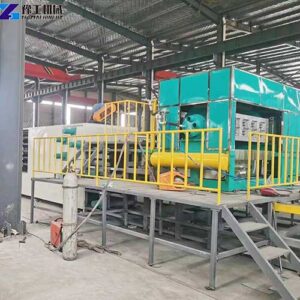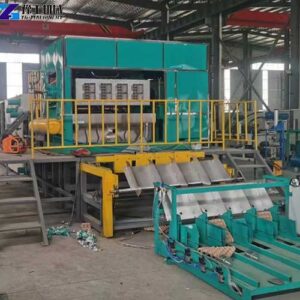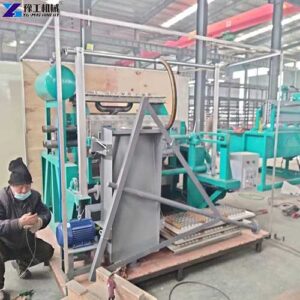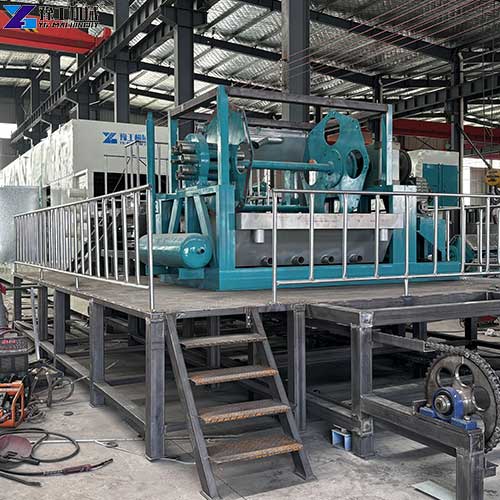
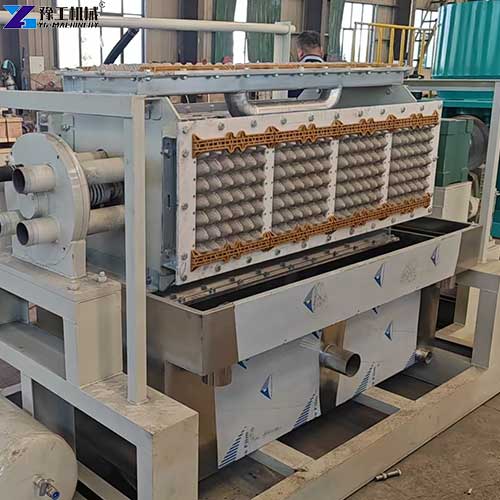
This case study showcases how Carlos Mendoza, a cardboard recycling factory owner near La Paz, Bolivia, successfully upgraded his low-margin recycling business by launching a recycled egg tray production project. For years, his factory only collected and resold waste cardboard with limited profits. Seeking higher added value, Carlos planned to turn abundant local waste cardboard into marketable egg trays for local farms. With professional customized guidance from YG, he selected a matched production line based on his factory area, local costs, market demand, and drying conditions. After systematic cost calculation, site layout planning, and equipment installation, his factory now stably produces 4,000 to 6,000 egg trays daily. This project effectively extended his industrial chain, maximized raw material utilization, and brought more stable and profitable revenue for his recycling business.
Get 12-Month Warranty & 24/7 Technical Support – Learn More
Customer Background
Carlos Mendoza runs a mid-sized cardboard recycling facility outside La Paz, Bolivia.
For six years, his factory had focused on collecting, sorting, and baling waste cardboard from supermarkets, warehouses, and commercial districts. The factory handled around 80–100 tons of waste cardboard per month, which was mainly sold to paper mills in neighboring countries.
The business was stable, but the profit margin was limited.
Carlos wanted to move one step further in the recycling value chain:
Instead of only selling waste cardboard, could the factory turn part of it into finished egg trays and sell directly to local egg farms and packing houses?
Why Egg Trays Were a Natural Next Step
Carlos already had one important resource: waste cardboard.
Instead of selling all collected cardboard as a low-value raw material, part of it could be processed into finished egg trays.
This offered a simple business model:
| Existing Business | New Business Model |
|---|---|
| Collect waste cardboard | Collect waste cardboard |
| Sort and bale | Sort and prepare raw material |
| Sell to paper mills | Pulp and mold into egg trays |
| Earn from raw material sales | Sell finished packaging products |
| Limited value added | Higher value added |
The goal was not to replace the existing recycling business immediately.
Carlos planned to use the existing cardboard supply while gradually building a new egg tray customer base.
First Technical Discussion With YG Egg Tray Production Machine
Carlos found YG through the company website and contacted the team from Bolivia.
Because of the time difference between Bolivia and China, he expected a delayed response. Instead, YG responded within a few hours.
The first discussion focused on four practical questions:
- What types of waste paper could be used?
- How much paper would be needed?
- Which production capacity matched his market?
- What drying method would work best in Bolivia?
Carlos provided the following local information:
| Local Condition | Customer Information |
|---|---|
| Waste cardboard | About $100–180/ton |
| Electricity | About $0.07/kWh |
| Water | Municipal water |
| Labor | About $400-600/month/worker |
| Factory area | About 400 m² |
| Target output | 4,000–6,000 trays/day |
This information allowed YG to discuss the project based on the customer’s actual factory conditions rather than simply recommending the largest machine.
Get 12-Month Warranty & 24/7 Technical Support – Learn More
Choosing the Right Egg Tray Production Line
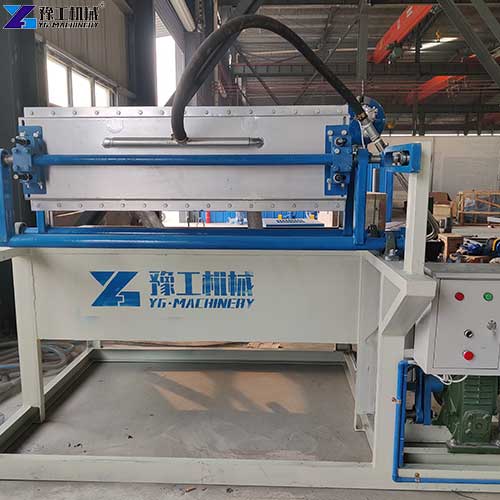
YG’s egg tray production lines cover different output levels and drying configurations.
| Production Line Models | Output (p/h) | Hydraulic Pulper | Egg Tray Machine | Drying Method | |||
| Natural Drying | Brick Drying Line | Single-layer Metal Drying Line | Multilayer Metal Drying Line | ||||
| YGDT3×1-1000 | 1000 | ZDS1(1m³) | DTF3×1 | √ | √ | √ | √ |
| YGDT4×1-1500 | 1500 | ZDS1(1m³) | DTF4×1 | √ | √ | √ | √ |
| YGDT3×4-2000 | 2000 | ZDS1(1m³) | DT3×4 | √ | √ | √ | √ |
| YGDT4×4-2500 | 2500 | ZDS2(2m³) | DT4×4 | √ | √ | √ | √ |
| YGDT3×8-3000 | 3000 | ZDS2(2m³) | DT3×8 | √ | √ | √ | |
| YGDT4×8-4000 | 4000 | ZDS4(4m³) | DT4×8 | √ | √ | √ | |
| YGDT5×8-5000 | 5000 | ZDS4(4m³) | DT5×8 | √ | √ | √ | |
| YGDT5×12-6000 | 6000 | ZDS6(6m³) | DT5×12 | √ | √ | √ | |
| YGDT6×8-7000 | 6000-7000 | ZDS6(6m³) | DT6×8 | √ | √ | √ | |
For Carlos’s project, production capacity had to be considered together with the available factory area, local demand, labor, and drying conditions.
The key point was simple:
The best machine is not always the biggest machine. It is the machine that matches your raw material, market demand, factory space, and drying method.
Get 12-Month Warranty & 24/7 Technical Support – Learn More
Production Cost Calculation for the Bolivia Project
Instead of using one fixed production cost for every project, YG calculated the main cost items according to local conditions.
Assuming waste cardboard at $100/ton and an 80 g tray:
| Cost Item | Calculation Basis | Estimated Cost / 1,000 Trays |
|---|---|---|
| Waste cardboard | 80 kg × $100/1,000 kg | $8 |
| Water | Local water cost assumption | $0.75 |
| Electricity | 25 kWh × $0.07/kWh | $1.75 |
| Labor | Depends on production and drying method | Calculated separately |
| Drying fuel | Only for artificial drying | Depends on fuel |
| Pigment | If colored trays are required | Depends on dosage |
Direct subtotal before labor and drying fuel: about $10.50 per 1,000 trays.
Get 12-Month Warranty & 24/7 Technical Support – Learn More
Why Didn’t He Just Place an Order? What Was He Worried About?
Concern 1: Factory Layout
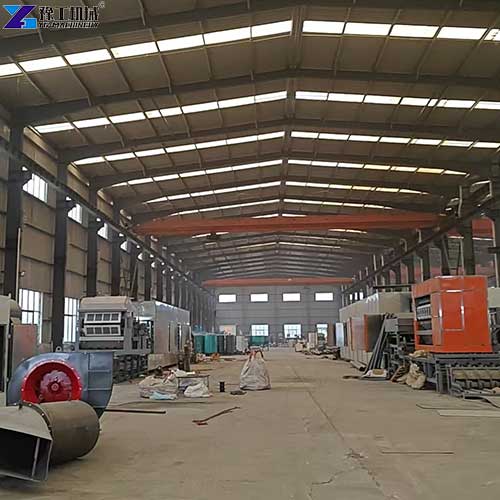
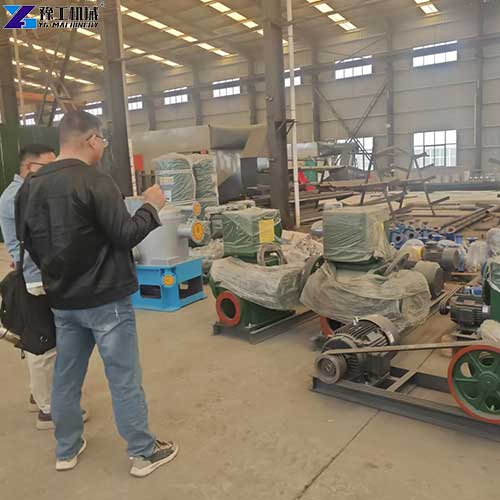
Carlos’s existing facility was designed for cardboard collection, sorting, and baling. Adding an egg tray production line meant fitting pulping, moulding, drying, and packing equipment into the same building without disrupting the existing recycling operation.
YG’s engineer requested photos and a rough floor plan of the facility. Within 48 hours, they returned a proposed layout showing:
- The pulping area positioned near the existing cardboard storage zone, with a short conveyor path from the baling area to the pulper
- The egg tray moulding machine placed in the center of the available space, with clear access for the forming and transfer process
- The drying area (natural sun drying, since Carlos didn’t want to invest in a fuel-fired dryer at this stage) positioned along the south-facing wall to maximize solar exposure
- The packing and storage area near the loading dock for easy outbound logistics
The total footprint required was approximately 250 square meters — well within Carlos’s 400 square meters of available space. The layout preserved the existing recycling workflow while adding the egg tray production line along one side of the facility.
Concern 2: Tape and Impurity Handling — The Biggest Worry
This was Carlos’s most significant concern, and it came up early in the conversation. His waste cardboard stream contains a lot of adhesive tape, plastic labels, staples, and other contaminants. When the cardboard is crushed and pulped, these impurities don’t dissolve — they end up as foreign material in the pulp slurry. If not properly removed, they can clog the egg tray moulding machine, damage the mould surfaces, and produce defective trays with weak spots or holes.
Carlos had seen videos of other egg tray production lines where the pulp looked clean and uniform. His raw material was anything but clean. He was worried that the contamination level in his cardboard would make consistent production impossible.
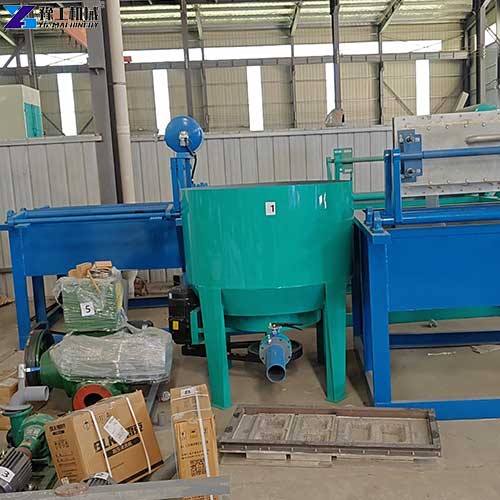
YG’s engineer addressed this directly: the production line includes a pulper machine (hydropulper) as the first stage of the process. The pulper does two critical things:
- Crushing and defibering: The waste cardboard is fed into the pulper with water. The rotating blades and hydraulic action break down the cardboard into individual fibers, creating a uniform pulp slurry.
- Impurity separation and filtration: The pulper is equipped with a screening system that separates heavy impurities (staples, plastic pieces, tape fragments) from the fiber slurry. The heavy contaminants sink to the bottom of the pulper tank and are collected in a reject chamber for periodic removal. The clean pulp slurry flows through a series of filters — typically a coarse screen followed by a fine screen — that remove smaller particles and residual adhesive fragments.
The engineer explained that tape and plastic contaminants, while visually concerning in the raw cardboard, are actually relatively easy to separate during pulping because they don’t break down into fibers. They remain as discrete pieces that the screening system catches and removes. The result is clean pulp slurry suitable for moulding.
YG also recommended that Carlos add a simple pre-sorting step at the cardboard intake — a worker spends 15-20 minutes per batch removing the largest pieces of tape and plastic before the material enters the pulper. This reduces the load on the screening system and extends maintenance intervals.
With this explanation and a video demonstration of the pulper’s impurity separation process, Carlos’s concern was resolved.
Project Results After Using YG Egg Tray Making Machine
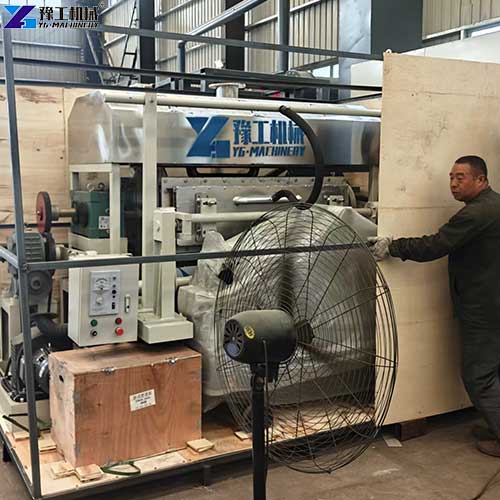
The equipment was installed and commissioned about four months after the initial inquiry.
The project then began supplying local customers.
| Result | Project Performance |
|---|---|
| Target production | About 4,000–6,000 trays/day |
| Main product | Recycled paper egg trays |
| Main customers | Egg farms and packing houses |
| Existing factory | Reused instead of building a new facility |
| Raw material | Local waste cardboard |
| Additional products | Specialty egg trays |
| Employment | Local workers involved in production |
The biggest change was not simply the number of trays produced.
Carlos’s recycling factory now had another way to use the cardboard it collected.
Instead of stopping at collection → sorting → baling → selling, the business could move further toward:
Collection → Recycling → Manufacturing → Selling Finished Products
Get 12-Month Warranty & 24/7 Technical Support – Learn More
Carlos’s Experience With YG Egg Tray Making Machine
“Before this project, we mainly sold recycled cardboard. Now we can use part of that material to make a finished product. YG helped us understand the equipment, production process, and cost calculation before we made the decision.”
For Carlos, the most useful part of the project was having the production plan discussed around his actual conditions in Bolivia.
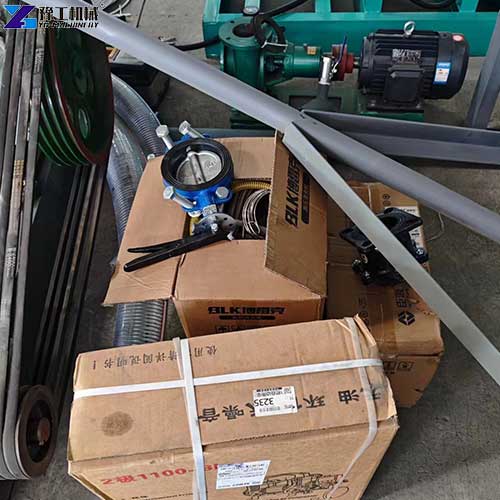
YG also provided production photos, videos, installation guidance, commissioning checklists, and regular project updates during the process.
Could an Egg Tray Production Line Work for Your Recycling Business?
This type of project may be worth considering if your business already has access to waste paper or cardboard.
| Your Situation | What to Consider |
|---|---|
| You collect large amounts of waste paper | You already have a key raw material source |
| You sell waste paper at low margins | Finished products may offer another business direction |
| You have local egg farms | There may be a nearby customer base |
| You have factory space | Part of the existing facility may be reused |
| You want to start small | Choose a production line that matches current demand |
| You expect demand to grow | Leave room for future equipment expansion |
The important step is to calculate the project based on your own raw material price, tray weight, production target, labor cost, electricity, drying method, and local selling market.
Want to Expand Your Business and Make Money? Choose YG Today
If you are already operating a recycling business, an egg tray production line can be a practical way to add value to waste paper.
YG can help you evaluate:
- waste paper type
- required production capacity
- egg tray size and weight
- drying method
- factory layout
- electricity and fuel requirements
- auxiliary equipment
- shipping and installation
- future production expansion
Send us your waste paper type, target output, factory size, and local conditions. YG can help you work out a suitable egg tray production solution for your market.
YG Machinery — Professional Quality, Reasonable Price, Good Service and Reputation.