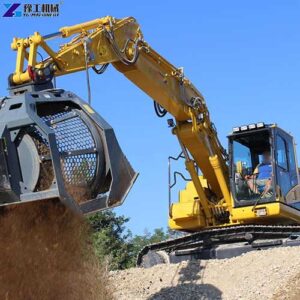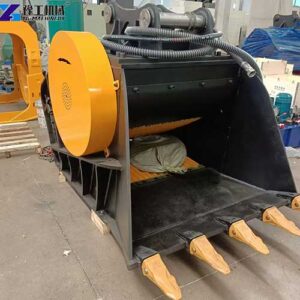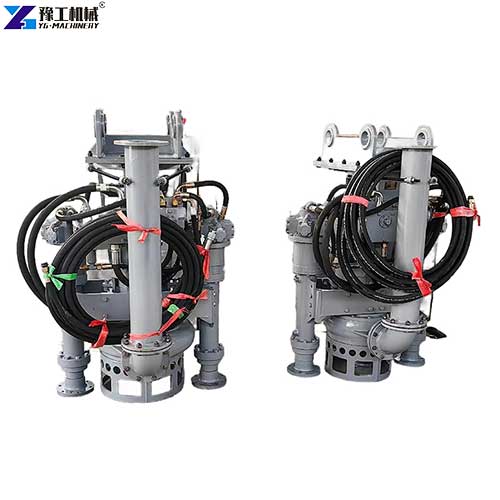
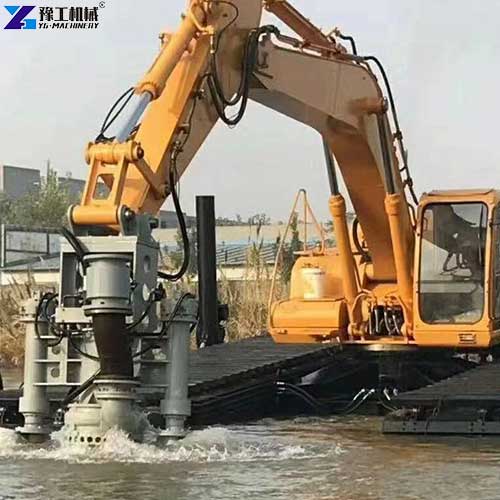
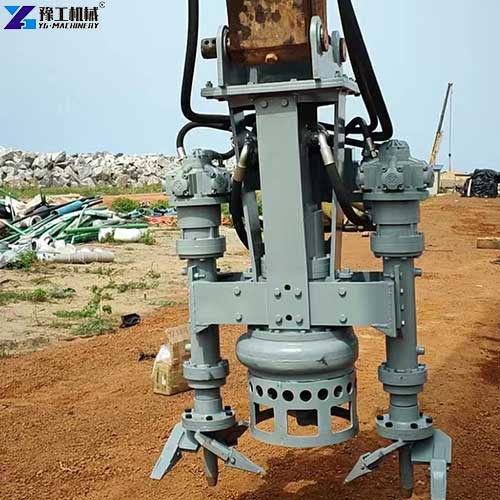
An excavator dredge pump is a hydraulic pump attachment installed on the arm of an excavator. It helps remove and transport sand, silt, mud, sludge, and water-containing sediment from underwater areas or waterlogged ground. Unlike a standard excavator bucket, which scoops up material and moves it in batches, an excavator dredge pump draws slurry into the pump and transfers it through a discharge pipe or hose. This allows the operator to move wet material continuously to a designated collection or disposal area. The attachment typically includes a hydraulic motor, pump body, impeller, suction inlet, and discharge connection. It is commonly considered for river, canal, and lake dredging, pond and reservoir sediment removal, port and harbor maintenance, tailings pond and slurry handling, wastewater pond and industrial sludge removal, sand and wet-material recovery, etc. For any questions, welcome to contact YG Machinery anytime.
Get 12-Month Warranty & 24/7 Technical Support – Learn More
Excavator Dredge Pump Parameters
| Serial No. | Model | Flow m3/h | Lift(m) | Matching Agitator | Stirrer Torque | Excavator Tonnage |
| 1 | YG200-15 | 200 | 15 | 5.5KW | 1556 | 10T-20T |
| 2 | YG150-30 | 150 | 30 | |||
| 3 | YG300-20 | 300 | 20 | |||
| 4 | YG400-10 | 400 | 10 | 7.5KW | 1946 | 20T-30T |
| 5 | YG500-15 | 500 | 15 | |||
| 6 | YG250-35 | 250 | 35 | |||
| 7 | YG300-30 | 300 | 30 | 15KW | 2433 | 30T-40T |
| 8 | YG400-30 | 400 | 30 | |||
| 9 | YG400-40 | 400 | 40 |
Get 12-Month Warranty & 24/7 Technical Support – Learn More
5 Steps of YG Excavator Dredge Pump Work
An excavator dredge pump uses hydraulic power to drive an impeller that draws in and transports a mixture of water and solid material.
Get 12-Month Warranty & 24/7 Technical Support – Learn More
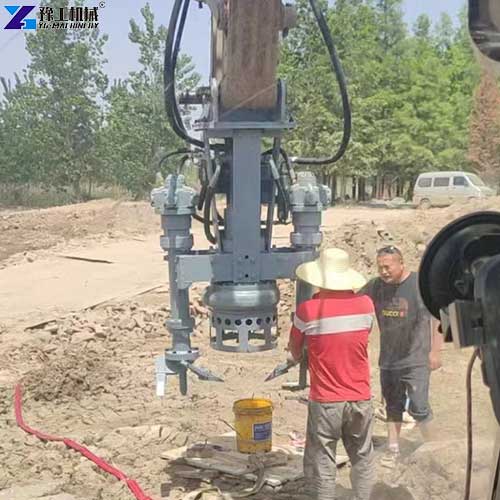
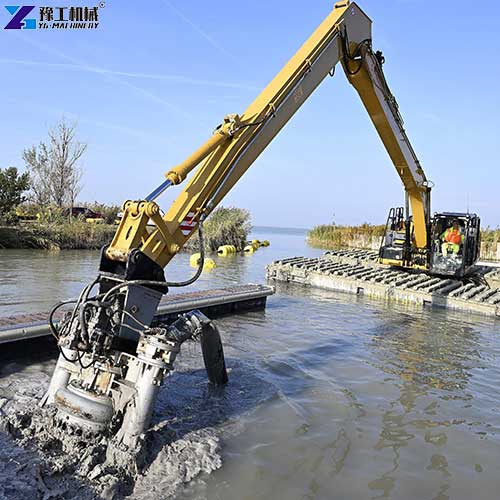
4 Key Features of YG Excavator Dredge Pump Attachment
- Hydraulic Drive: A hydraulic excavator dredge pump uses the excavator’s hydraulic system as its power source when designed for direct hydraulic connection. This setup can simplify equipment arrangement because the contractor may not need a separate electric motor at the pump itself. The excavator must still provide the hydraulic flow and pressure specified by the pump manufacturer.
- Continuous Slurry Transfer: A conventional bucket usually handles material in separate cycles: scoop, lift, move, and unload. An excavator dredge pump instead transfers slurry through a discharge line. This can be useful when the material is too wet to handle efficiently with a bucket or when the disposal point is some distance away.
- Flexible Positioning: Because the pump is mounted on an excavator arm, the operator can move it across a working area without positioning a separate pump at every point. This is useful for canals, ponds, riverbanks, and other areas where the excavator can be safely positioned within reach of the sediment.
- Wear-Resistant Pump Components: Sand and abrasive sediment can wear pump impellers and internal flow passages. Wear-resistant materials and suitable component design can help manage this problem. The best material selection depends on the slurry’s abrasiveness, particle size, concentration, and operating hours. Regular inspection and maintenance are still necessary.
5 Applications of YG Excavator Dredge Pump
1. River and Canal Dredging: Rivers and canals gradually collect sand, silt, and mud. An excavator dredge pump can remove suitable sediment and transport it to a collection area, helping maintain the waterway’s designed depth and flow.
2. Pond and Reservoir Cleaning: Ponds and reservoirs may accumulate fine sediment over time. The pump can help remove suitable deposits, especially where wet material is difficult to scoop and transport with a conventional bucket.
3. Mining and Tailings Ponds: Mining operations may need to move sand-rich slurry, settled sediment, or process residues.
4. Wastewater and Industrial Sludge Removal: Settling ponds, treatment facilities, and industrial basins can accumulate sludge that needs to be removed.
5. Port and Harbor Maintenance: Ports and harbor areas may require periodic removal of accumulated sediment. An excavator-mounted pump can be useful in suitable nearshore and confined areas where the excavator can reach the material safely.
Get 12-Month Warranty & 24/7 Technical Support – Learn More
Excavator Dredge Pump vs. Underwater Dredge Robot
| Comparison | Excavator Dredge Pump | Underwater Dredge Robot |
|---|---|---|
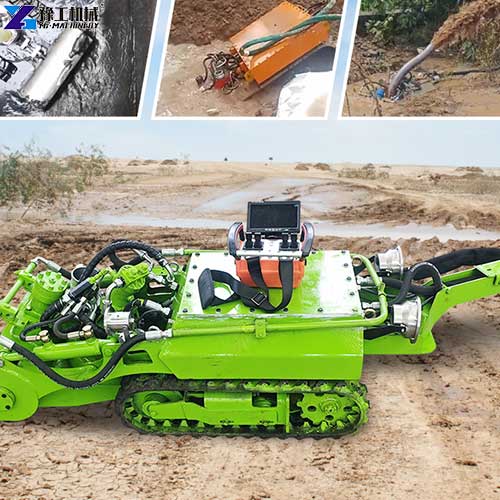
| Main function | Pumps sand, mud, silt, and slurry from underwater areas and transfers the material through a discharge pipeline. | Combines underwater movement, sediment stirring, and slurry pumping for dredging and cleaning operations. |
| Installation | Mounted directly on a compatible excavator arm. | Uses an integrated tracked underwater chassis and a separate hydraulic power station. |
| Moving method | Moves and changes working positions with the excavator boom and arm. | Moves along the underwater ground using its own crawler tracks. |
| Operation | Usually controlled by the excavator operator from the cab. | Uses a wireless remote control system, allowing the operator to control the robot remotely. |
| Power system | Powered by the excavator’s hydraulic system. | Uses a dedicated hydraulic power station; the listed models have main motor ratings from 22 kW to 45 kW. |
| Working position | Suitable when an excavator can safely reach and position the pump over the target sediment. | Suitable for underwater areas where the robot can travel across the bottom and work within its operating limits. |
| Typical applications | River dredging, reservoir desilting, port maintenance, pond sediment removal, and shallow-water sand pumping. | Urban river cleaning, narrow waterways, ponds, irrigation canals, and underwater sediment removal. |
Get 12-Month Warranty & 24/7 Technical Support – Learn More
2 Customer Applications of YG Excavator Dredge Pump
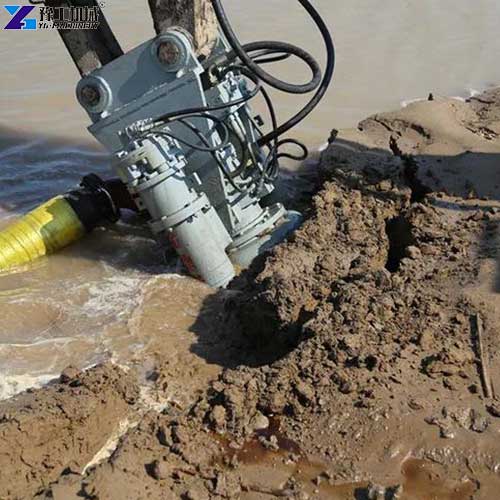
The following examples are illustrative scenarios designed to show how an excavator dredge pump could be used in different working environments. They are not verified YG customer testimonials. For publication as real customer feedback, replace them with actual customer names, project locations, photos, and confirmed results.
Customer 1: Canal Sediment Removal in the Philippines
Application: Irrigation canal and drainage maintenance
Working challenge: A local contractor needs to remove accumulated silt and soft mud from a canal. The sediment contains a large amount of water, making conventional bucket excavation and truck transport less convenient. The work also needs to progress along a narrow canal section.
Possible solution: A compatible excavator dredge pump attachment is positioned over the sediment. If the material is suitable for pumping, the pump transfers the slurry through a discharge hose to a designated collection area.
Illustrative customer feedback:
“The canal contained a lot of soft mud mixed with water. We wanted to move the material directly through a hose instead of handling every bucket load separately. The most important things for us were matching the pump to our excavator and planning where the slurry would be discharged.”
Why this setup may help: Direct slurry transfer can reduce repeated bucket handling when the material and site conditions suit pumping. The contractor should confirm the hydraulic requirements, sediment properties, hose route, and discharge location before operation.
Get 12-Month Warranty & 24/7 Technical Support – Learn More
Customer 2: Tailings Pond Sediment Handling in Indonesia
Application: Sand-rich sediment and slurry removal at a mining site
Working challenge: A mining contractor needs to remove settled material from a pond. The sediment may contain abrasive sand and other solids, so ordinary water pumps may not be suitable. The team also needs to transport the slurry to a designated processing or collection point.
Possible solution: A suitably rated excavator dredge pump with compatible wear-resistant components and, where required, an agitator can be considered. The pump, excavator, and pipeline must be selected according to the actual particle size, solids concentration, discharge distance, and lift requirements.
Illustrative customer feedback:
“Our main concern was handling abrasive material without choosing a pump that was too small for the job. We needed to check the solids content, the distance to the discharge point, and whether the excavator could provide the required hydraulic flow. Those details mattered more than choosing a pump based on its name alone.”
Why this setup may help: Pumping can provide a direct method for transferring suitable slurry. However, abrasive material can increase wear, and highly concentrated or oversized solids may require a specialized pump or intake configuration. Performance should be assessed against the material and operating conditions.
Get 12-Month Warranty & 24/7 Technical Support – Learn More
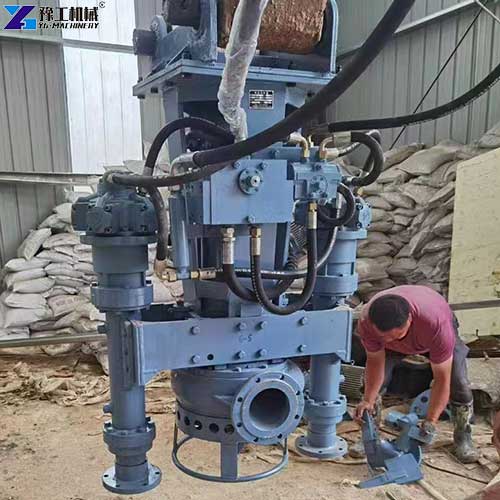
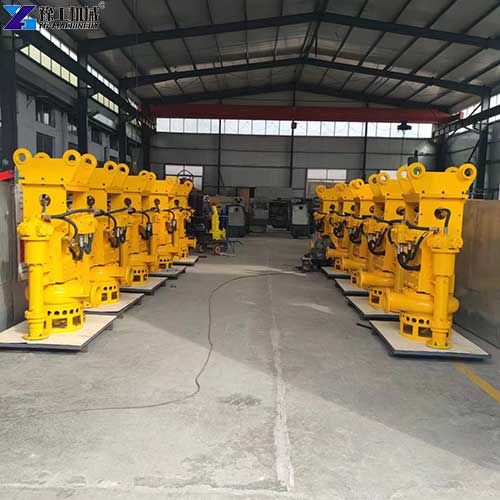
Factory Direct Excavator Dredge Pump-Choose YG Machinery
Removing wet sand, settled mud, and slurry can be challenging when conventional excavation requires repeated handling. A properly selected excavator dredge pump can turn a compatible excavator into a flexible slurry-transfer system for canal maintenance, pond dredging, mining operations, and other suitable applications.
Whether you are comparing an excavator dredge pump attachment, researching excavator dredge pump price, or deciding between a pump and an underwater dredge robot, YG Machinery can help you assess the working conditions and identify a suitable pump configuration.
Contact YG Machinery today to discuss your dredging project and find an excavator dredge pump that matches your equipment, material, and site requirements.