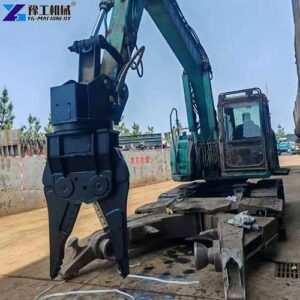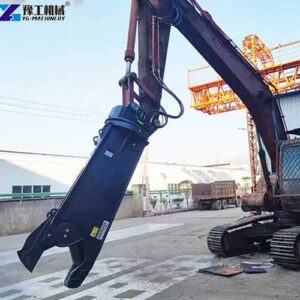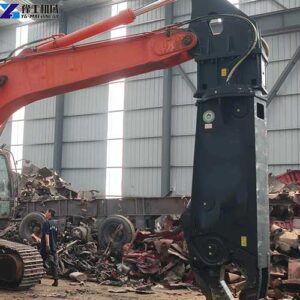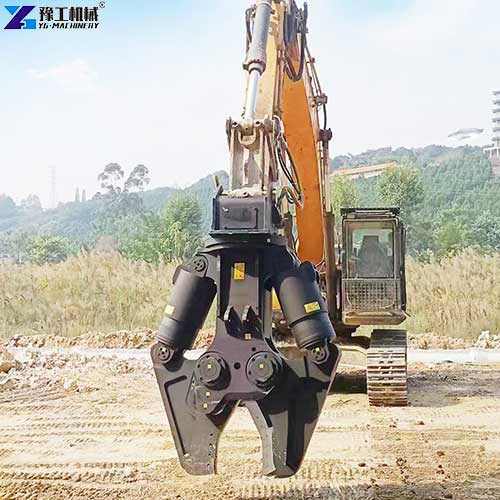
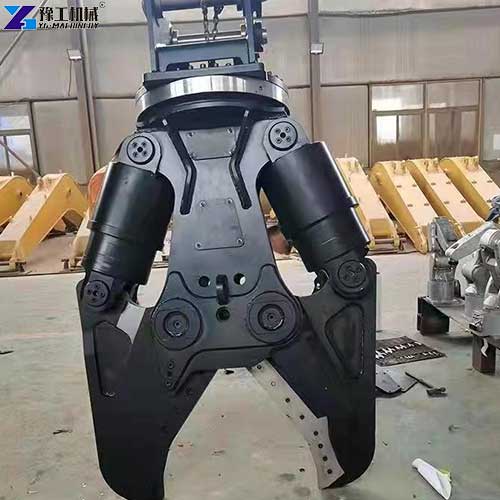
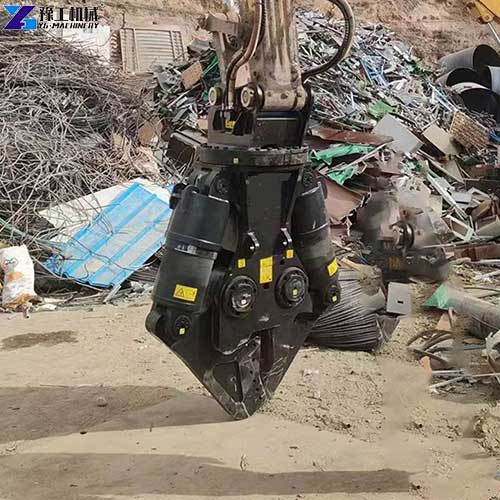
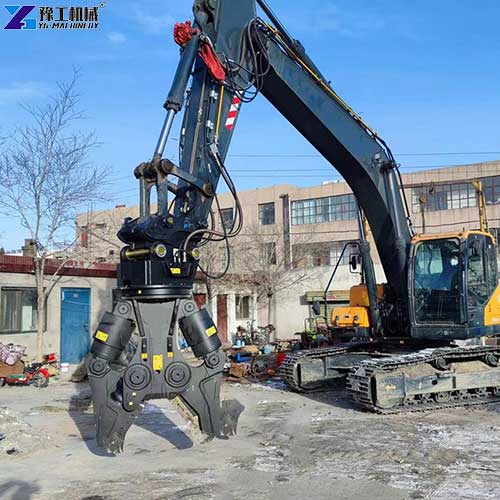
The term hydraulic shear is a broad category. It can refer to different hydraulic cutting machines, including excavator-mounted shears and stationary cutting equipment. A double cylinder hydraulic shear is one specific design within this category. Double cylinder hydraulic shears are hydraulic cutting attachments that use two hydraulic cylinders to drive the cutting mechanism. They are designed to cut and process suitable materials such as steel sections, scrap metal, and selected demolition materials, depending on the attachment’s design and rated capacity. They are commonly mounted on excavators, where the excavator’s hydraulic system supplies the power needed to open and close the shear jaws.
Lock In Today’s Factory Price – Request a Quote Now
Double Cylinder Hydraulic Shears Parameters
| Model | YG-40 | YG-80 | YG-180 | YG-290 | YG-390 |
| Applied Excavator | 3-5t | 6-9t | 12-18t | 20-30t | 30-40t |
| Weight | 360 kg | 750 kg | 1600 kg | 2800 kg | 3600 kg |
| Driving Pressure | 200 Mpa | 250 Mpa | 300 Mpa | 320 Mpa | 320 Mpa |
| Oil Flow | 60 L/min | 150 L/min | 250 L/min | 280 L/min | 350 L/min |
| Opening | 335mm | 435mm | 600mm | 740mm | 800mm |
| Shearing Depth | 280mm | 330mm | 460mm | 550mm | 650mm |
| Shearing Force | 37t | 62t | 108t | 156t | 250t |
| Overal Length | 1160mm | 1420mm | 1900mm | 2207mm | 2700mm |
Lock In Today’s Factory Price – Request a Quote Now
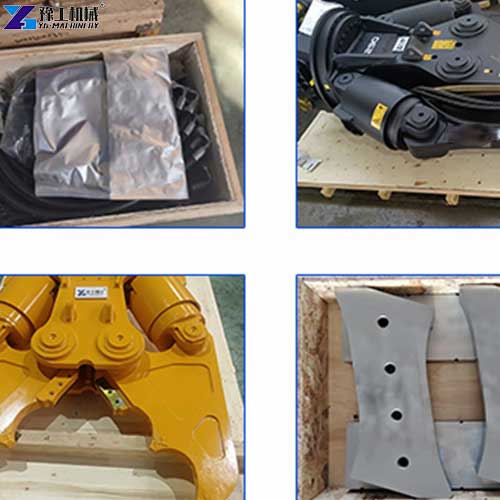
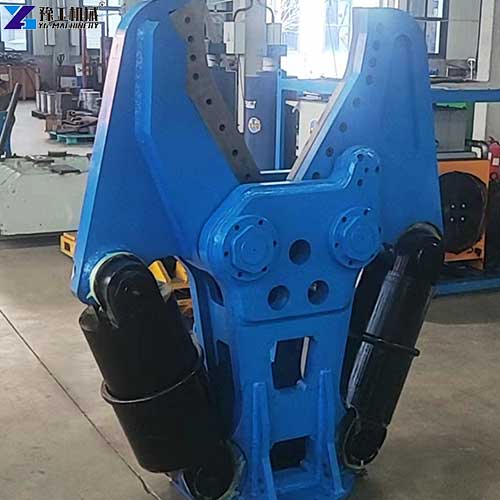
What Does “Double Cylinder” Mean? How Does It Work?
The term “double cylinder” means that the shear uses two hydraulic cylinders to drive its cutting mechanism. The two cylinders work through the attachment’s mechanical linkage to open and close the jaws.
The basic working process is straightforward.
- The excavator supplies hydraulic power: The excavator’s hydraulic pump sends pressurized hydraulic oil through the hydraulic lines to the shear. The oil provides the force needed to move the cylinders. For the attachment to work correctly, the excavator’s hydraulic flow and pressure must match the shear’s requirements. The operator should also check the required hydraulic connections and any auxiliary functions.
- The two cylinders drive the jaws: When the operator activates the controls, hydraulic oil enters the cylinders and moves their pistons. The piston movement is transferred through the linkage to open or close the cutting jaws. Using two cylinders can help provide the force and mechanical arrangement required by the attachment’s design. However, actual cutting force depends on the cylinder dimensions, hydraulic pressure, jaw geometry, and the material being cut. Two cylinders do not automatically mean that every model has greater cutting force than every single-cylinder shear.
- The cutting edges apply force to the material: The operator positions the jaws around a suitable section of steel or other approved material. When the jaws close, the cutting edges apply force to the target material until it separates. The operator must select an appropriate cutting position and avoid exceeding the attachment’s rated capacity. Material thickness, steel grade, shape, and cutting angle can all affect performance.
- The operator repositions and repeats: After the material has been cut, the operator opens the jaws and repositions the attachment for the next cut. Depending on the job, the excavator may also move the cut pieces into a designated area for further sorting or transport.
Lock In Today’s Factory Price – Request a Quote Now
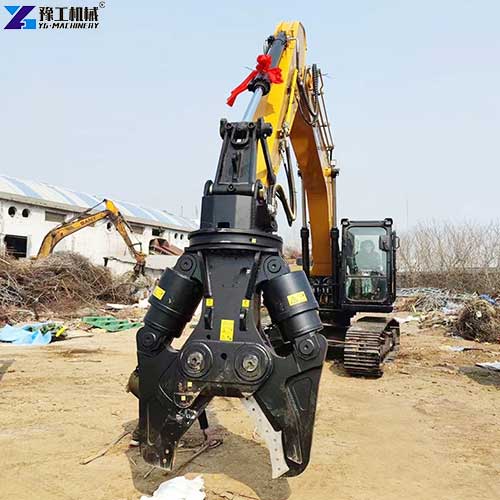
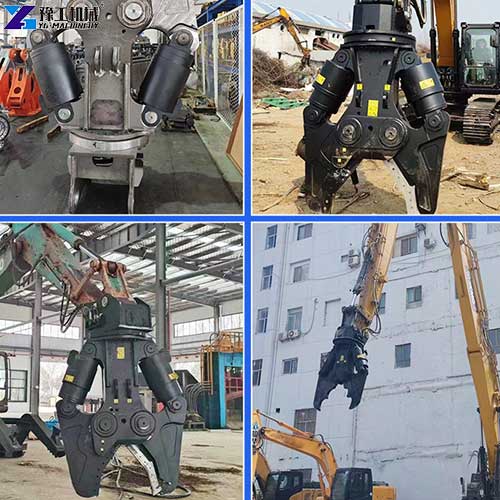
What Are the Main Features of Double Cylinder Hydraulic Shears?
- Strong hydraulic cutting capability: The two-cylinder design provides the driving force for the cutting mechanism. Its actual performance depends on the design of the cylinders and linkage, together with the excavator’s hydraulic system.
- Suitable for demanding demolition work: During demolition, operators may need to cut steel components, reinforcing bars, and other metal parts after separating them from the surrounding structure. A properly selected hydraulic shear can help make these operations more controlled and efficient.
- Can reduce manual cutting work: An excavator-mounted shear allows the operator to cut suitable materials from the machine, reducing the need for workers to handle every cutting operation manually. This can help organize the workflow and reduce direct worker exposure to some cutting hazards.
- Flexible for different material sizes: Jaw opening, blade design, and cutting geometry affect which materials the attachment can handle. Some models are designed for larger structural sections, while others are better suited to scrap processing.
- Works with 10-30t excavators: Compatible with most brands of 10-30 ton excavators on the market, offering strong compatibility. Hydraulic shears can be installed on suitable excavators when the excavator’s weight class, hydraulic flow rate, pressure, mounting interface, and lifting capacity meet the accessory requirements.
Where are Double Cylinder Hydraulic Shears Used? 5 Applications
- Building and industrial demolition: During the dismantling of factories, warehouses, and other structures, a hydraulic shear can cut steel beams and metal components after they have been safely exposed and positioned. This helps separate metal from other demolition materials.
- Scrap metal recycling: Scrap yards handle steel plates, sections, and mixed metal pieces of different sizes. Double-cylinder hydraulic shears can cut oversized pieces into more manageable sections for sorting, handling, and transportation.
- Vehicle dismantling: Excavator shears can be used for selected cutting operations during vehicle dismantling. The jaw shape and rotation capability matter when working around different vehicle components, so an eagle shear may be preferable for some precision-oriented tasks.
- Ship dismantling and heavy scrap processing: Suitable hydraulic shears can help cut approved steel sections during ship dismantling and other heavy metal recycling operations.
- Construction waste processing: After concrete or other materials have been separated, a hydraulic shear can cut exposed reinforcing steel and other approved metal pieces. A breaker or concrete-processing attachment may be needed for the concrete itself.
Lock In Today’s Factory Price – Request a Quote Now
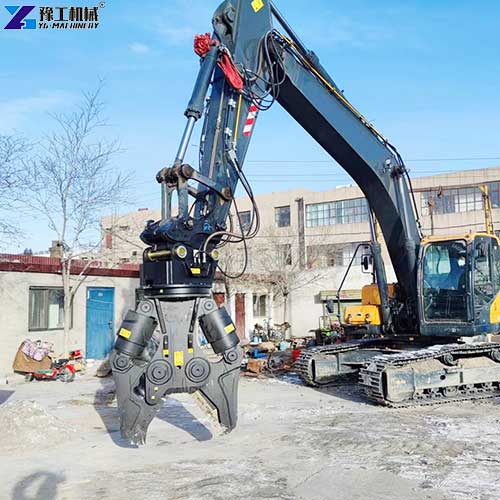
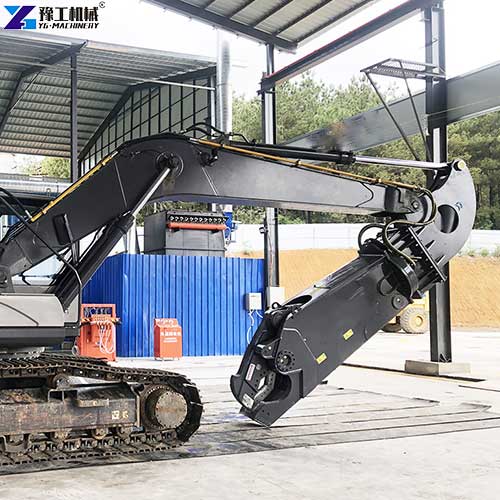
Double Cylinder Hydraulic Shears vs. Eagle Shears: Which Is Better?
The two attachment types overlap, but their designs may suit different jobs.
| Comparison | General double cylinder hydraulic shear | Excavator eagle shear |
|---|---|---|
| Main design focus | Hydraulic cutting force and jaw capacity | Narrow, pointed cutting head and accurate positioning |
| Jaw shape | Often wider, depending on the model | Typically tapered like an eagle’s beak |
| Cylinder configuration | Two cylinders drive the cutting mechanism | May use one or two cylinders |
| Rotation | Depends on the model; do not assume full rotation | Commonly equipped with hydraulic rotation, often 360° |
| Typical work | Structural steel cutting, demolition, large scrap pieces | Scrap sorting, vehicle dismantling, steel structure cutting at different angles |
| Key buying factor | Jaw opening, cutting capacity, cylinder and blade design | Jaw geometry, rotation, cutting capacity, and positioning |
| Best selection approach | Match the cutting mechanism to the material and task | Choose when the narrow jaw and rotation offer a practical advantage |
Which one should you choose?
If your main work involves cutting suitable steel sections and processing scrap, compare the cutting capacity and jaw opening of double cylinder hydraulic shears.
If you frequently need to reach steel components from different angles, handle vehicle frames, or position the cutting head precisely, an excavator eagle shear with suitable hydraulic rotation may be more practical.
Neither type is universally better. The correct attachment is the one that matches your excavator and your actual cutting tasks.
Lock In Today’s Factory Price – Request a Quote Now
3 Overseas Customer Feedback Examples
The following feedback examples are written around typical work scenarios in the United States, Indonesia, and the Philippines. They are illustrative drafts, not verified customer quotations or confirmed YG sales records. Replace them with actual customer comments before publishing them as testimonials.
Customer Feedback 1: United States — Steel Structure Demolition
Application: Dismantling an old industrial building and cutting exposed steel components.
“We needed an excavator attachment that could help us cut steel sections during industrial demolition. Our main concerns were cutting capacity, compatibility with our excavator, and whether the attachment could handle the materials we commonly encounter.
The double cylinder hydraulic shear was a useful option to evaluate for this work. Its hydraulic jaw mechanism allowed the operator to cut suitable steel components directly from the excavator. This helped us organize the cutting process and separate metal materials for further handling.
Before choosing the final model, we checked the excavator’s hydraulic requirements and the dimensions of the steel sections. Matching the attachment to the actual job was an important part of our decision.”
Customer Feedback 2: Indonesia — Scrap Metal Recycling
Application: Processing mixed scrap steel at a recycling yard.
“Our recycling work involves handling steel pieces of different shapes and sizes. Some materials are too large to transport or sort conveniently without cutting them first.
We wanted a hydraulic shear that could work with our excavator and help prepare suitable scrap for the next stage of processing. We focused on the jaw opening, cutting capacity, blade maintenance, and hydraulic compatibility before selecting an attachment.
A suitable double-cylinder hydraulic shear can make this kind of work more organized by allowing operators to cut approved steel pieces into manageable sections. We also recognized that regular blade inspections and correct operation are essential for maintaining performance.”
Customer Feedback 3: Philippines — Ship and Heavy Metal Dismantling
Application: Cutting selected steel sections during ship and heavy metal dismantling.
“Our project involved dismantling steel components in areas where the cutting angle and access could change from one section to another. We needed to consider both cutting capacity and how easily the excavator operator could position the attachment.
We compared general hydraulic shears with rotating eagle shears. For work that requires more precise positioning, an eagle shear with hydraulic rotation may be a better fit. For other cutting tasks, a suitable double cylinder shear may also be worth considering.
The key lesson was to select the attachment according to the material and working position instead of choosing by name alone. Checking the machine’s specifications and the excavator’s hydraulic capacity helped us narrow down the options.”
Lock In Today’s Factory Price – Request a Quote Now
5 FAQs about YG Double Cylinder Hydraulic Shears
They can be suitable for certain thick steel sections, but only when the material falls within the attachment’s rated capacity. Steel grade, thickness, shape, and cutting position all affect performance.
It is an excavator attachment that uses two hydraulic cylinders to drive its cutting mechanism. Depending on its design and rated capacity, it can be used for suitable steel cutting, scrap processing, demolition, and selected industrial dismantling tasks.
Not necessarily. Cutting force depends on cylinder dimensions, hydraulic pressure, linkage design, jaw geometry, and other factors. Compare the rated cutting performance of specific models rather than relying only on cylinder quantity.
No. Rotation depends on the model and configuration. Confirm whether the attachment is fixed or rotating, and check the required hydraulic functions before ordering.
Provide the excavator brand, model, operating weight, hydraulic pressure, oil flow, and mounting details. The supplier should verify compatibility with the specific attachment and the intended operating conditions.
Factory Direct Double Cylinder Hydraulic Shears-Choose YG Supplier
Choosing the right double-cylinder hydraulic shears can help you handle suitable steel cutting, demolition, and scrap processing tasks more efficiently. The most important step is to match the attachment’s cutting capacity and hydraulic requirements to your excavator and the materials you work with.
Whether you need a general hydraulic shear or an excavator eagle shear with a rotating cutting head, YG Machinery offers excavator attachments for different construction, demolition, and recycling applications.
Contact YG today to discuss your project and request a quotation. The YG team can help you evaluate suitable options and offer the price of double-cylinder hydraulic shears.