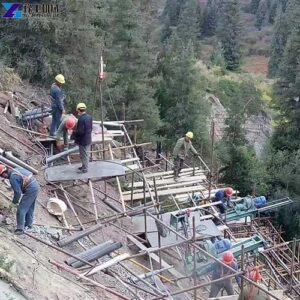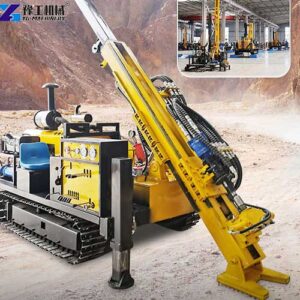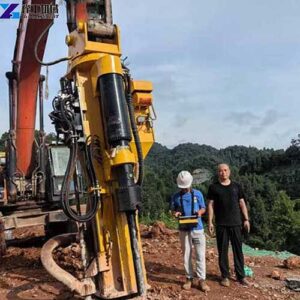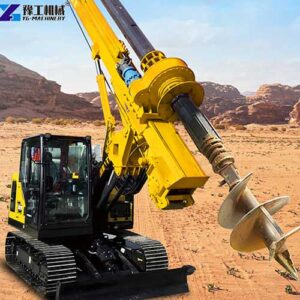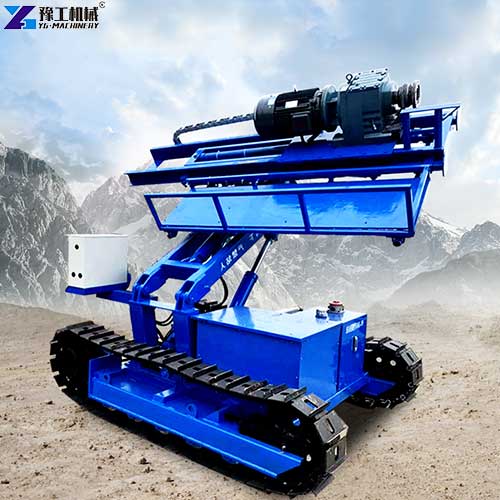
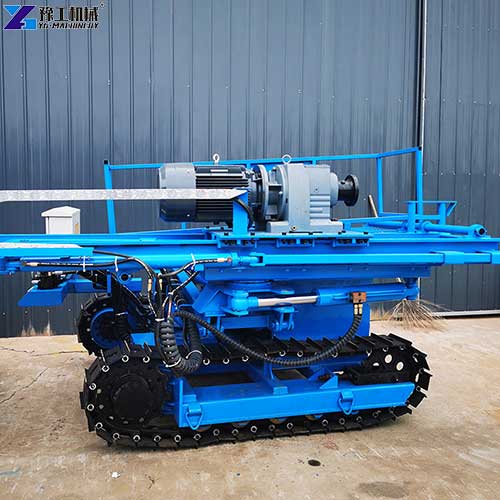
An anchor drilling rig is a type of engineering drilling machine designed to drill holes for ground anchors, anchor bolts, anchor cables, and soil nails. These anchoring systems help stabilize slopes, support foundation pits, reinforce retaining walls, and improve the safety of tunnels and other structures. Unlike drilling equipment used mainly to collect underground rock samples, an anchor drilling rig focuses on creating holes in the correct positions, at the required angles and depths, so that anchors can be installed securely. If you are interested, please contact YG immediately for more information.
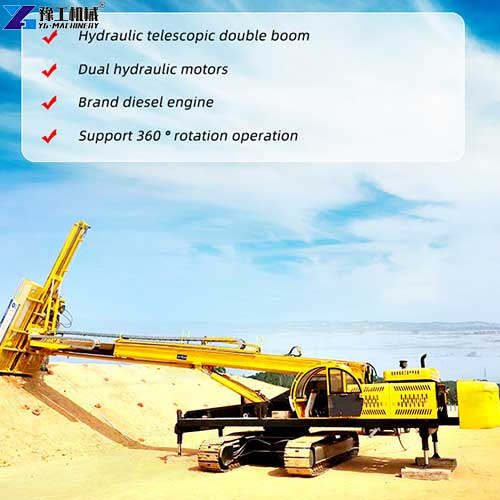
YG Crawler Anchor Drilling Equipment Parameters
| Model | 6M | 15M | 30M |
| Track(mm) | 2300*3500 | 2300*4000 | 5000*3000mm |
| Width of crawler(mm) | 400 | 400 | 600 |
| Main arm | Double boom, two sections | Double boom two sections | Double boom four sections |
| Drilling angle | Drillable flat hole/drillable inclined hole/drillable vertical hole | ||
| Drilling diameter | 5-300mm | 5-300mm | 5-300mm |
| Depth | 0-70m | 0-70m | 0-70m |
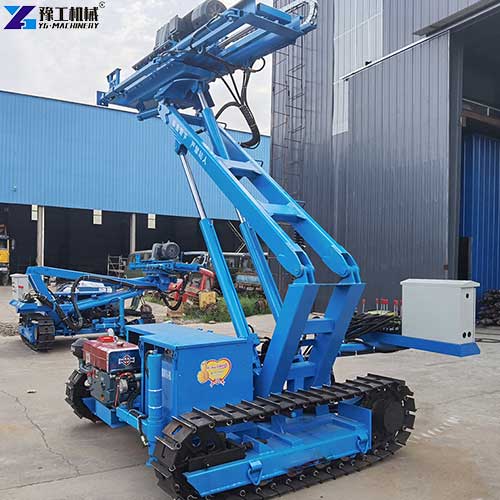
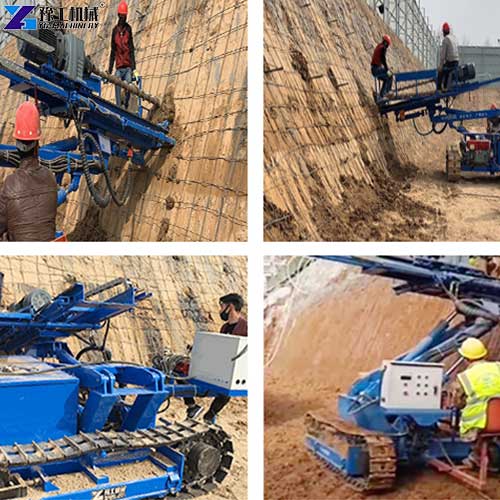
How Does an Anchor Drilling Rig Work?
An anchor drilling rig uses a power system, drill head, drill rod, drill bit, and feed mechanism to create a hole for an anchoring system.
The exact process depends on the rig design and drilling method, but the main steps are similar.
5 Key Features of an Anchor Drilling Rig
The benefits of an anchor drilling rig depend on the model and configuration. The following are common features of hydraulic and crawler-mounted designs.
5 Main Applications of YG Anchor Drilling Rig
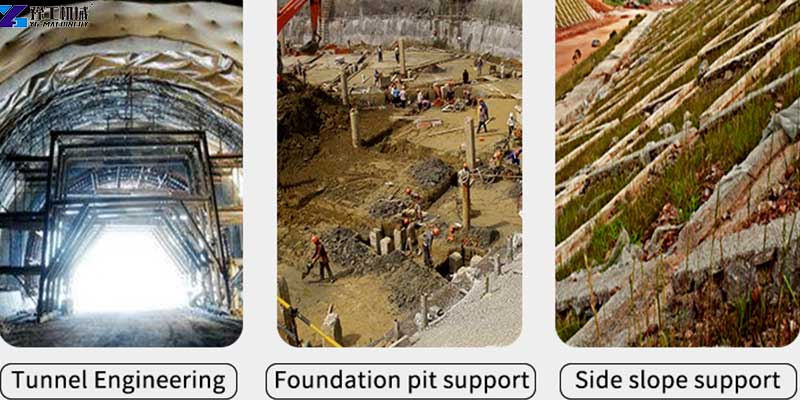
- Highway and Railway Slope Protection: An anchor drilling rig creates holes for anchor cables, rock bolts, and other slope reinforcement systems. These systems help improve slope stability and reduce the risk of rock movement or landslides when properly designed and installed.
- Deep Foundation Pit Support: During excavation for buildings, underground parking areas, and metro projects, anchor drilling rigs can create holes for ground anchors and soil nails used in retaining and support systems.
- Tunnel Reinforcement: Depending on the machine configuration and tunnel design, the rig may be used for selected anchor holes and reinforcement work to help stabilize surrounding ground.
- Water Conservancy and Hydropower Projects: Suitable configurations can support anchor drilling, drainage holes, and selected foundation treatment work around dams and other hydraulic structures.
- Rock Reinforcement and Geological Hazard Control: In suitable projects, anchor drilling equipment can help create holes for reinforcing unstable rock masses and supporting engineering measures against rockfall or slope movement.
Anchor Drilling Rig vs. Full Hydraulic Core Drilling Rig vs. Rotary Drilling Rig Machine
These three types of drilling equipment may all rotate a drill string, but they are designed around different project goals. The best choice depends on whether you need to install anchors, recover rock samples, or construct larger-diameter foundation holes.
| Comparison | Anchor drilling rig | Full hydraulic core drilling rig | Rotary drilling rig machine |
|---|---|---|---|
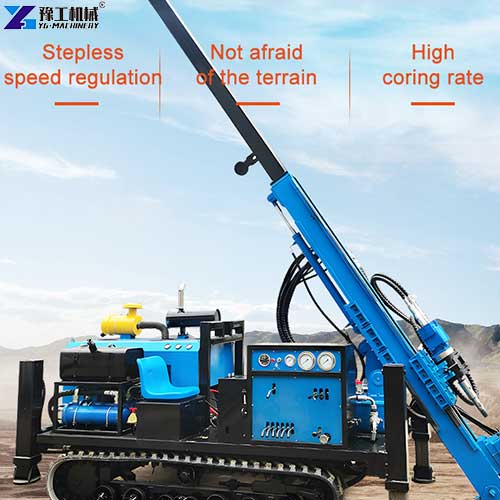
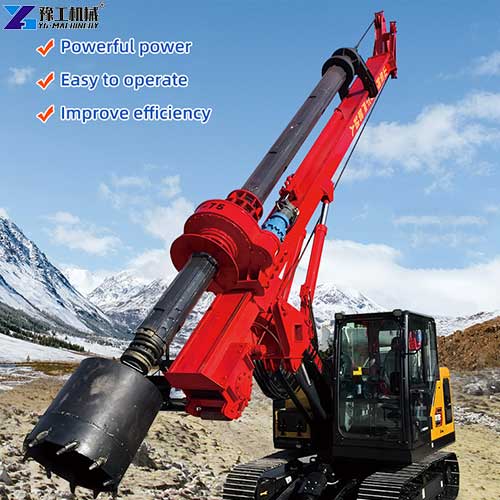
| Main purpose | Create holes for ground anchors, anchor cables, and soil nails | Drill boreholes and recover rock cores for geological investigation | Construct foundation pile holes for buildings, bridges, and other structures |
| Typical output | A borehole ready for an anchoring system | Rock or soil samples, often in core form | A pile hole prepared for foundation construction |
| Typical projects | Slope protection, foundation pit support, selected tunnel reinforcement | Mineral exploration, geological surveys, engineering investigation | Building foundations, bridge foundations, and large civil engineering projects |
| Drilling approach | Often rotary drilling, with other methods available on compatible models | Rotary coring using a core bit and core barrel | Commonly rotary excavation using an auger, drilling bucket, or other suitable tool |
| Hole requirements | Set by anchor design, including angle, depth, and diameter | Set by the investigation program, formation, and required core size | Set by pile design, required diameter, and foundation depth |
| Drilling angle | Many models support inclined drilling; some also support vertical or horizontal work | Commonly vertical or inclined, depending on the model | Often mainly vertical for conventional bored piles |
| Mobility | Compact or crawler-mounted options are available | Crawler and other configurations are available | Commonly a large machine designed for foundation construction sites |
| Main selection factor | Anchor-hole layout, ground conditions, drilling angle, and required depth | Core recovery, geological information, and drilling depth | Pile diameter, pile depth, ground conditions, and construction method |
The table describes typical applications rather than absolute rules. Actual capabilities vary by model and tooling. A full hydraulic core drilling rig is designed around sample recovery, while an anchor drilling rig is primarily designed to prepare holes for anchoring work. A rotary drilling rig machine used for foundation piles usually handles a different scale and construction purpose.
Which Machine Should You Choose?
- Choose an anchor drilling rig if your main work involves slope stabilization, ground anchors, soil nails, or foundation pit support.
- Choose a full hydraulic core drilling rig if you need rock cores for mineral exploration, geological surveys, or engineering investigation.
- Choose a rotary drilling rig machine if your project requires bored foundation piles for buildings, bridges, or other civil engineering structures.
Some projects may need more than one type of machine. For example, a construction team might use a rotary drilling rig machine to build foundation piles and an anchor drilling rig to reinforce the surrounding excavation walls.
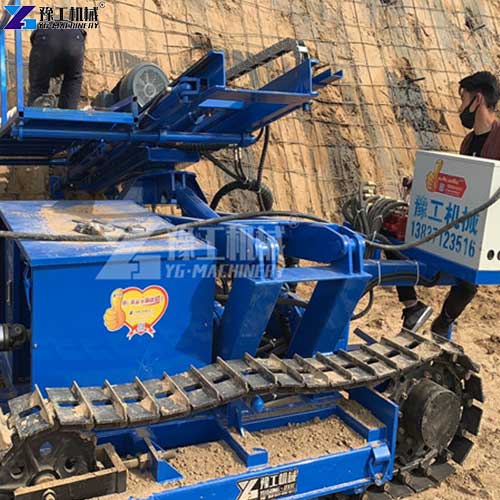
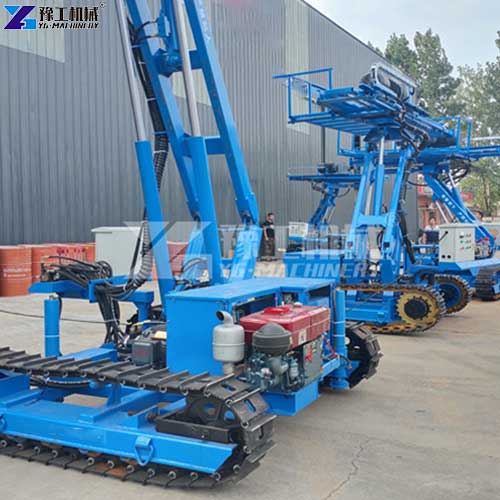
Two Overseas Anchor Drilling Rig Applications
Customer 1: Highway Slope Stabilization in Peru
Project: Highway slope reinforcement in a mountainous area
Challenge: A road contractor is working along a mountain highway where exposed rock and fractured sections require reinforcement. The team needs to drill inclined holes for anchor cables at several positions along the slope. The work area is narrow, and moving large equipment between drilling locations is difficult.
Equipment requirement: A crawler anchor drilling machine with suitable mast-angle adjustment, enough drilling capacity for the specified anchor holes, and a crawler undercarriage appropriate for the site.
Illustrative customer feedback:
“Our main concern was drilling at the required angle while working along a narrow mountain road. We needed equipment that could move between drilling positions and handle the planned anchor-hole layout. Before selecting the rig, we checked the drilling depth, mast adjustment range, and suitability for the rock conditions.”
Customer2: Foundation Pit Support in the Philippines
Project: Ground-anchor installation for an urban building excavation
Challenge: A construction contractor is excavating a deep foundation pit in a developing urban area. The retaining structure requires anchor holes at planned positions and angles. Space around the excavation is limited, so the drilling equipment must be able to position accurately without interfering with other construction work.
Equipment requirement: A hydraulic anchor drilling rig with suitable positioning control, the required drilling range, and dimensions compatible with the working area.
Illustrative customer feedback:
“Our foundation project required consistent hole positioning along the retaining wall. We compared the rig’s working dimensions, drilling angle, and hole capacity with the construction drawings. We also checked whether the machine could work within the available site space and coordinate with our anchor installation team.”
Factory Direct Anchor Drilling Rig-Choose YG
Choosing the right anchor drilling rig starts with understanding your construction conditions. Whether you are reinforcing a highway slope, installing ground anchors around a foundation pit, or carrying out geotechnical support work, the machine must match the required hole specifications and site environment.
YG Machinery can help you evaluate the key technical requirements and identify a suitable configuration for your project.
Contact YG Machinery today to discuss your drilling requirements and find a practical solution for your next construction project.