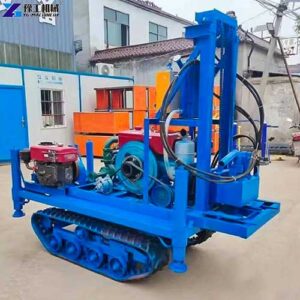
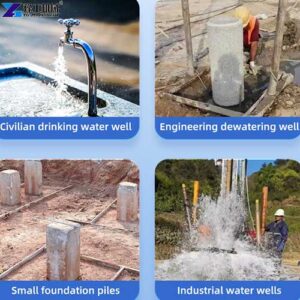
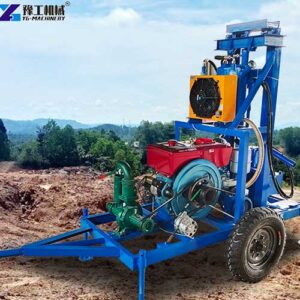
This case study details how a farmer in San Miguel de Allende, Mexico, rescued his drought-stricken farm with the YG-240-30P crawler small water well drilling rig. Facing severe crop failure from three months of extreme drought, he invested in YG’s compact tracked drilling equipment to secure reliable irrigation water. Guided by professional technical support and video tutorials, he successfully drilled an 85-meter well through complex red clay and limestone layers, delivering a stable water supply for 5 hectares of corn fields. Thanks to its flexible crawler design and fully automatic rod-changing system, the rig adapted perfectly to local sloped, uneven farmland while greatly cutting drilling time and labor workload. Want to get a similar effect? Contact YG at +86 139 3718 3205 for details.
Want More Case Studies? Contact YG For More Details
July–September 2025
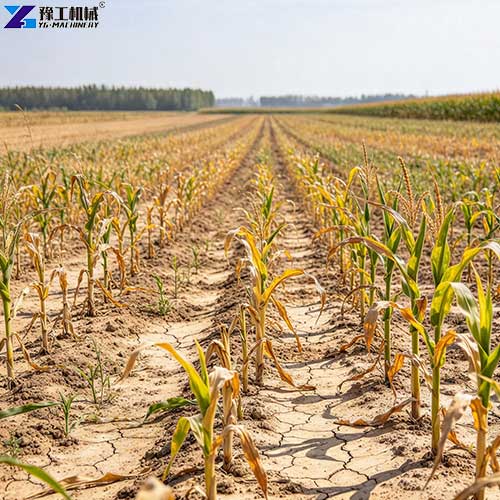
My Corn Was Dying.
A farmer near San Miguel de Allende watched his corn and bean crops suffer after three months without rain. With the harvest at risk, he began searching for a small water well drilling rig.
Early October 2025
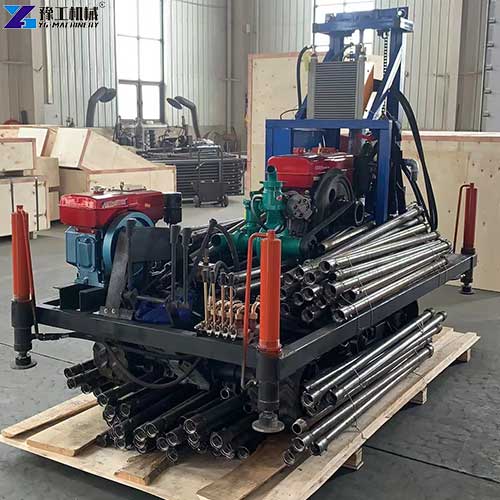
The Rig Arrived
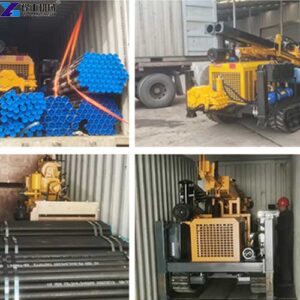
The YG-240-30P crawler small water well drilling rig arrived on a flatbed. Its rubber tracks made it easy to move across the farm’s slopes and uneven ground.
October 2025
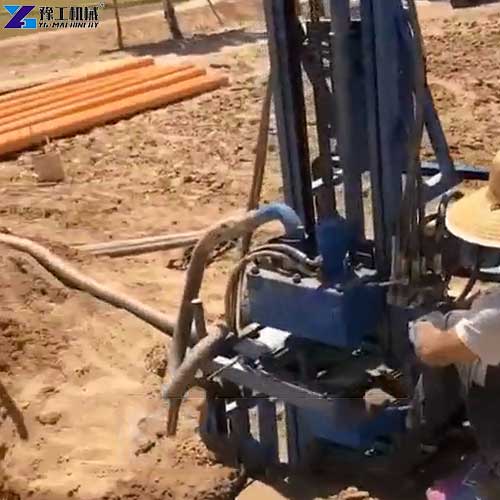
Drilling Started
The farmer began drilling with help from a video guide and technician. The rig passed through 40 meters of red clay and a limestone layer before reaching groundwater at about 85 meters.
Late October 2025
Water Reached the Fields
The well produced about 8 liters per minute. After installing a submersible pump and drip irrigation system, water began flowing to 5 hectares of corn.
2026
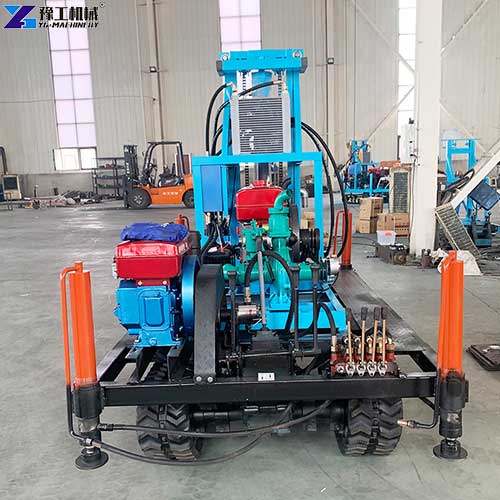
More Farmers Chose YG Crawler Small Water Well Drilling Rig
Inspired by the successful well, three neighboring farming families ordered their own YG-240 crawler small water well drilling rigs for irrigation and deeper water wells.
Want More Case Studies? Contact YG For More Details
YG Crawler Small Water Well Drilling Rig Parameters
| Model | YG-240-22P | YG-240-30P |
| Dimension | 1450*1550*1970mm | 2000*1230*2090mm |
| Weight | 200kg | 200kg |
| Drill rod diameter | 42mm | 51mm |
| Drill rod length | 1.5m/unit | 1.5m/unit |
| Rod change method | Full automatic screw thread | Full automatic screw thread |
| Max drilling depth | 200m | 200m |
| Diesel engine power | 22HP | 30HP |
| Drilling hole diameter | Within 280mm | 100mm-240mm |
| Lifting height | 2.5m | Max 2.5m |
| Lifting force | 1000kg | 2000kg |
Want to Know More Detailed Product Information? Contact YG Now!
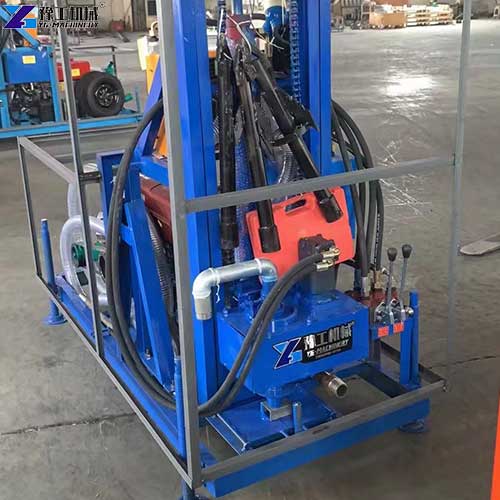
People who haven’t used a small water drilling machine don’t realize how much time rod changes eat up. Let me explain.
For a 100-meter well with 1.5-meter rods, you need about 67 rod connections. Every time you add a rod, the old process goes like this: stop the machine, grab the next rod, align it with the previous one, thread it by hand or with a wrench, tighten it, resume drilling. That’s maybe three to five minutes per connection. Multiply by 67 — you’re looking at three to five hours of just connecting rods.
The YG-240’s full automatic screw thread system does it differently. You load the next rod, the machine aligns and threads it, and you’re drilling again in about 90 seconds. Over 67 connections, that saves you three or four hours of work. On a 200-meter well with 130+ connections, the time savings are enormous.
That’s not just about speed — it’s about your back, your hands, and your patience. Drilling is already hard physical work. Removing the most repetitive, awkward part of the job makes the whole experience sustainable for a one-person operation.
I’ve seen wheeled drilling rigs in other parts of Mexico. They work fine on flat, hard ground. My land is not that.
The Guanajuato hillside where I farm has a 15-degree slope in some areas. The soil is mixed — clay in the lower sections, rocky in the upper ones, soft sand near the arroyo. A wheeled machine would have spun out on the slope or sunk in the sandy patches.
The small crawler water well drilling rig with rubber tracks handled all of it. It climbed the slope, crossed the soft ground near the arroyo, and positioned itself exactly where I needed it without any external help. I didn’t need a tractor to tow it. I didn’t need four guys to push it. I drove it myself.
The rubber tracks also mean it doesn’t tear up my field. After drilling, I just drove it back to the road and loaded it on the flatbed. The crop rows where it passed were undamaged. That matters when every square meter of planted land counts.
Do You Have A Similar Situation? Contact YG
If You’re Farming Without Reliable Water, Here’s What Customers’ve Learned
After drilling four wells in my community — mine and helping three neighbors — here’s the advice I keep giving:
- Study your land first. Walk your property and look for natural indicators: where does the soil stay damp? Where do trees grow greener? Where does water collect after rain? These signs point to the best drilling spots. Talk to older farmers in your area — they remember where water used to flow decades ago.
- The crawler version is worth it. If your land has any slope, uneven ground, or soft soil — and most farmland does — the tracked model saves you enormous hassle. I can’t imagine trying to do this with a wheeled rig on my hillside.
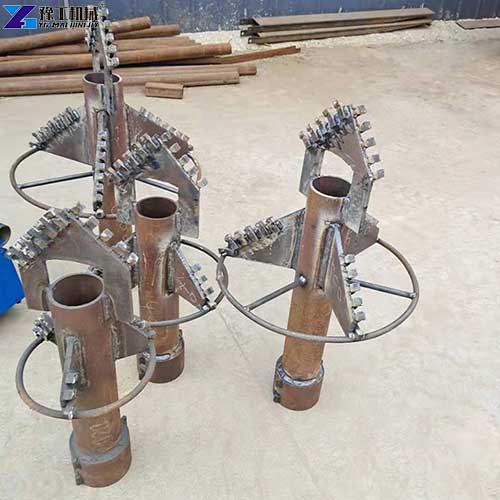
- Keep extra bits ready. You will go through bits faster than you expect, especially if you hit unexpected rock. I now carry three spare bits for every well I drill.
- Use drilling fluid from the start. I learned this the hard way on my second well attempt — without proper fluid, the hole walls collapsed in soft layers. Start using it from meter one.
- Connect with other operators. When I was searching for small water well drilling rigs, I found online groups of farmers and small-scale drillers across Mexico, the U.S., and Central America. The tips they share about local geology, bit selection, and casing techniques are worth more than any manual.
Don Hernando’s Words Say It Best
Last week, Don Hernando finished his own well with his new crawler small water well drilling rig. He’s 72 years old. He drilled to 70 meters and found enough water for his two hectares of beans and his small orchard.
He called me over to see it. The water was flowing clear into his storage tank. He stood there for a long time, hands on his hips, looking at the small water drilling machine sitting next to the wellhead.
Then he looked at me and said, “I spent 50 years praying for rain. Now I have my own.”
Want to drill a well? Contact YG now!
That’s what this rig does. It doesn’t just drill holes — it gives you control over the one thing every farmer needs, and nobody can guarantee. Water. When you need it. Where you need it.
If your land is thirsty and you’re tired of waiting for the sky to take pity — maybe it’s time to look into a crawler small water well drilling rig for yourself. The machine is small. The results are not. Don’t hesitate to contact YG now.