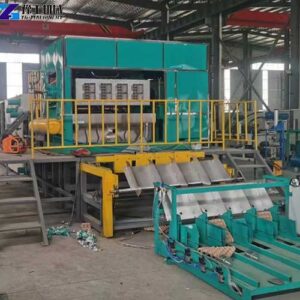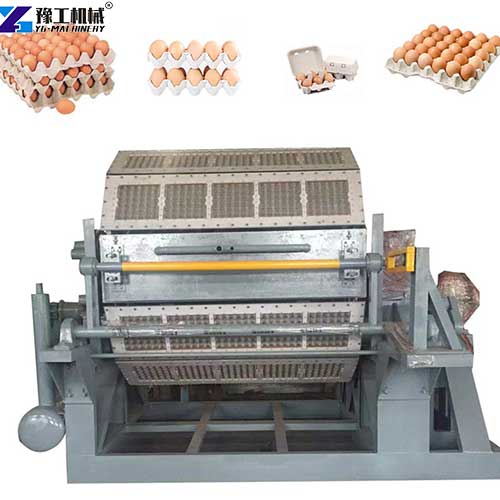
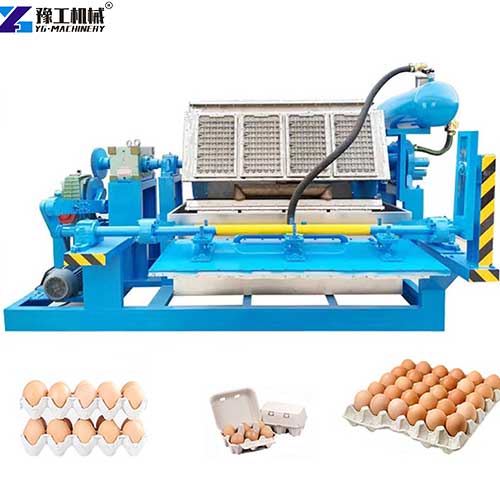
For poultry farms and egg producers, egg packaging is a necessary daily expense. Every egg must be collected, protected, stored, and transported. Egg trays help prevent eggs from hitting each other, but buying trays from outside suppliers can create several problems.
The price may change. Delivery may be late. Packaging quality may be unstable. During busy seasons, farms may also face shortages.
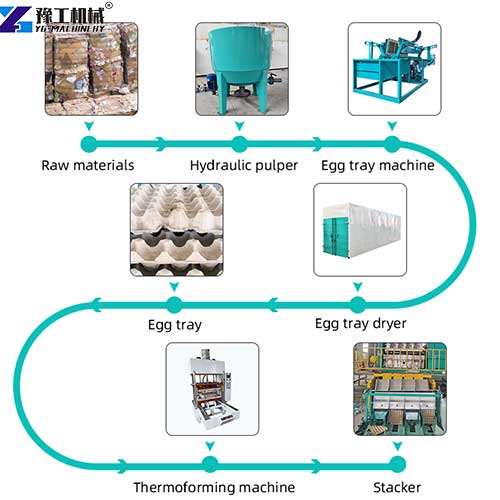
For these reasons, more poultry businesses are considering an egg tray manufacturing machine. Instead of buying all packaging from outside, farms can use waste paper and water to produce their own trays.
The best equipment depends on the size of the farm. Small farms often prefer semi-automatic equipment because it requires a lower initial investment and is easier to manage. Large farms and professional egg producers may need a fully automatic production line with higher output and continuous drying.
This article explains how poultry farms can choose equipment, estimate tray demand, compare production systems, and build a suitable egg tray production system. Want to know more details? Please contact YG at +8613937183205.
Click to Inquire about Detailed Information on the Egg Tray Manufacturing Machine
Egg Tray Manufacturing Machine Specific Parameters
| Production Line Models | Output (p/h) | Hydraulic Pulper | Egg Tray Machine | Drying Method | |||
| Natural Drying | Brick Drying Line | Single-layer Metal Drying Line | Multilayer Metal Drying Line | ||||
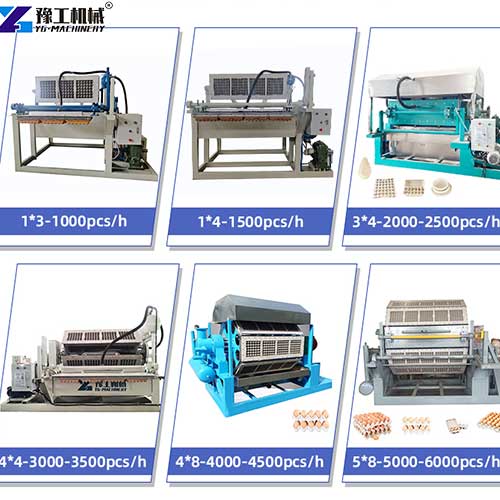
| YGDT3×1-1000 | 1000 | ZDS1(1m³) | DTF3×1 | √ | √ | √ | √ |
| YGDT4×1-1500 | 1500 | ZDS1(1m³) | DTF4×1 | √ | √ | √ | √ |
| YGDT3×4-2000 | 2000 | ZDS1(1m³) | DT3×4 | √ | √ | √ | √ |
| YGDT4×4-2500 | 2500 | ZDS2(2m³) | DT4×4 | √ | √ | √ | √ |
| YGDT3×8-3000 | 3000 | ZDS2(2m³) | DT3×8 | √ | √ | √ | |
| YGDT4×8-4000 | 4000 | ZDS4(4m³) | DT4×8 | √ | √ | √ | |
| YGDT5×8-5000 | 5000 | ZDS4(4m³) | DT5×8 | √ | √ | √ | |
| YGDT5×12-6000 | 6000 | ZDS6(6m³) | DT5×12 | √ | √ | √ | |
| YGDT6×8-7000 | 6000-7000 | ZDS6(6m³) | DT6×8 | √ | √ | √ | |
Click to Inquire about Detailed Information on the Egg Tray Manufacturing Machine
What Type of Egg Tray System Does Your Farm Need?
Before choosing an egg tray manufacturing machine, the most important question is not simply “How much does the machine cost?”
The better question is:
How many eggs does your farm produce, how many trays do you need every day, and how much labor and space are available?
| Farm Type | Typical Production Situation | Recommended System | Drying Method | Automation Level | Main Focus |
|---|---|---|---|---|---|
| Small Family Farm | Moderate egg output | Small egg tray production system | Natural drying | Semi-automatic | Simple operation and flexibility |
| Medium Poultry Farm | Medium daily egg production | Medium-capacity production line | Drying box or similar system | Semi-automatic / partially automatic | Stable output and labor control |
| Large Egg Producer | High daily egg output | High-capacity production line | Drying tunnel or multi-layer drying | Fully automatic | Continuous production and efficiency |
Why Egg Packaging Matters to Poultry Farms
Eggs are fragile products. Even when the eggshell looks strong, repeated vibration, pressure, and impact may cause cracks during handling and transportation.
Egg trays provide several important functions:
- Separate individual eggs
- Reduce contact between eggs
- Make counting easier
- Improve stacking
- Simplify loading and unloading
- Protect eggs during transportation
- Support wholesale and retail sales
For a poultry farm, trays are not an optional accessory. They are part of the daily production process.
If a farm produces a large number of eggs every day, the packaging requirement can become significant. The farm must think about the cost of each tray, storage space, delivery time, and the availability of replacement packaging.
An egg tray manufacturing machine gives the farm another option: producing packaging near the egg collection area.
How to Calculate Your Egg Tray Demand?
The required machine capacity should be connected to the number of eggs produced.
For example, if a farm has 1 million laying hens and the laying rate is 90%, the farm may produce around 900,000 eggs per day.
If one tray holds 30 eggs:
900,000 eggs ÷ 30 eggs per tray = 30,000 trays per day
This simple calculation shows why machine selection should be based on actual egg output rather than only the machine name.
A farm should calculate the following before choosing an egg tray manufacturing machine:
| Calculation Factor | Why It Matters |
|---|---|
| Number of laying hens | Determines potential egg production |
| Average daily egg production | Shows actual packaging demand |
| Eggs per tray | Determines daily tray requirement |
| Working hours per day | Helps calculate required machine capacity |
| Seasonal production changes | Helps avoid capacity shortages |
| Extra trays for storage and delivery | Provides packaging flexibility |
| Potential outside customers | Determines whether additional capacity may be useful |
The farm should also consider whether the machine will produce trays only for its own eggs or also for nearby farms and egg wholesalers.
Semi-Automatic vs. Fully Automatic Egg Tray Production
| Feature | Semi-Automatic System | Fully Automatic Production Line |
|---|---|---|
| Suitable Farm | Small or medium farms | Large farms and professional egg producers |
| Production Scale | Small to medium | Medium to high |
| Manual Work | More | Less |
| Tray Transfer | Manual or partially automatic | Automatic |
| Drying | Natural drying/drying box | Drying tunnel / multi-layer drying |
| Production Planning | Flexible | More continuous |
| Factory Space | Generally simpler | Requires planned production layout |
| Expansion | Equipment can be added gradually | Designed as an integrated system |
| Best For | Farms starting tray production | Farms with high daily packaging demand |
Click to Inquire about Detailed Information on the Egg Tray Manufacturing Machine
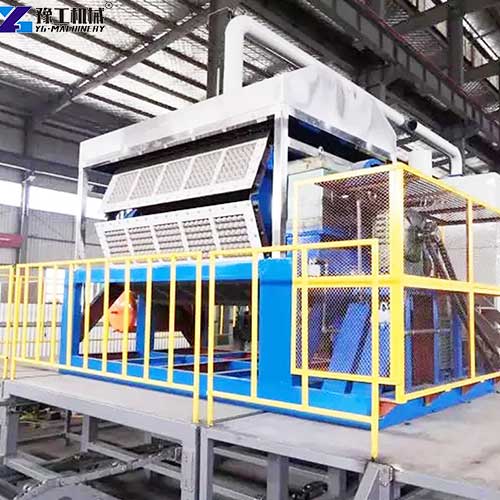
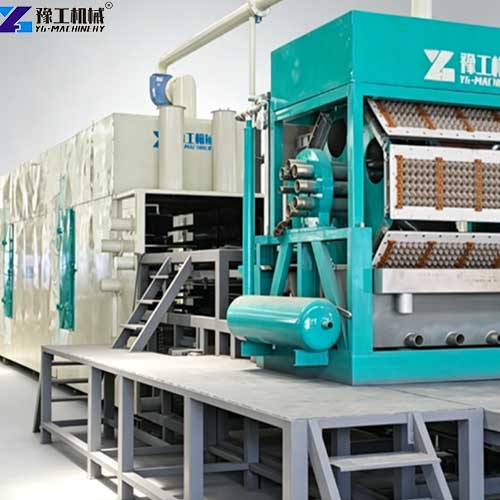
How an Egg Tray Manufacturing Machine Can Help Control Costs
The main reason poultry farms consider egg tray manufacturing machines is cost control.
However, the actual operating cost depends on several factors rather than one single number.
1. Main Cost Factors
| Cost Factor | What Affects the Cost? | Important Consideration |
|---|---|---|
| Waste Paper | Paper price and tray weight | Local waste paper prices should be checked |
| Labor | Automation and production process | Natural drying normally requires more manual work |
| Electricity | Machine power and working hours | Actual consumption depends on operating conditions |
| Drying | Drying method and energy source | Natural drying needs space; heated drying needs energy |
| Maintenance | Pumps, molds, conveyors, electrical parts | Regular maintenance helps keep production stable |
| Factory Space | Drying and production layout | Natural drying requires more open space |
| Auxiliary Equipment | Supporting machines and systems | Should be included in the project calculation |
2. Natural Drying vs. Heated Drying
| Item | Natural Drying | Heated Drying |
|---|---|---|
| Energy Requirement | Lower direct energy requirement | Requires fuel or electricity |
| Labor | More manual work | Less manual work |
| Space | Large open area | More controlled production area |
| Weather Dependence | Higher | Lower |
| Production Stability | Weather dependent | More stable |
| Suitable Situation | Suitable sunlight and available land | Continuous production requirements |
Natural drying may reduce energy costs but requires more space and labor. Heated drying requires fuel or energy but can offer more stable production.
Choosing the Right Egg Tray Manufacturing Machine for Different Farms
The equipment should match the farm’s actual production scale.
Machine Selection by Farm Size
| Farm Type | Suggested Models | Drying | Additional Equipment | Main Goal |
|---|---|---|---|---|
| Small Family Farm | YG-1000-3X1 / YG-1500-4X1 | Natural drying | Basic pulp preparation equipment, manual collection | Produce trays for own eggs |
| Medium Poultry Farm | YG-2500-3X4 / YG-3000-4X4 | Drying box | Semi-automatic transfer, racks or trolleys | Internal packaging + possible outside sales |
| Large Egg Producer | YG-4000-4X8 / YG-5000-5X8 / YG-7000-6X8 | Drying tunnel or multi-layer drying | Automatic stacking and packing | Continuous high-volume production |
The final machine should be selected according to actual daily egg production and the farm’s future expansion plan.
Customer Experience: Small Poultry Farm
A small poultry farm wanted to reduce its dependence on outside egg tray suppliers.
The farm did not need a large automatic line because its egg output was moderate and it had workers who could handle tray drying.
The farm selected a small production system with a simple forming machine and natural drying.
Main Benefits
| Customer Requirement | Solution |
|---|---|
| Moderate egg output | Small production system |
| Limited automation requirement | Simple forming machine |
| Available workers | Manual tray handling |
| Available outdoor space | Natural drying |
| Future growth | Possibility of adding a drying system |
The main benefits were:
- More control over tray supply
- Flexible daily production
- Use of locally available waste paper
- Lower equipment complexity
- Possibility of adding a drying system later
The customer’s feedback focused on flexibility. The farm did not need the highest output. It needed equipment that matched its actual egg production and available labor.
Customer Experience: Large Egg Producer
A larger egg producer faced a different problem.
Its daily egg output was high, and the farm needed a continuous supply of trays. Buying all trays from outside suppliers created storage and delivery pressure.
The customer considered a higher-capacity production line with automatic forming and a more organized drying system.
What the Customer Considered
| Consideration | Why It Matters |
|---|---|
| Stable pulp preparation | Supports consistent forming |
| Automatic tray transfer | Reduces manual handling |
| Drying capacity | Must match forming output |
| Factory layout | Affects the complete production flow |
| Tray stacking | Simplifies storage and handling |
| Maintenance access | Makes daily maintenance easier |
| Future expansion | Allows production capacity to grow |
The customer viewed the equipment as part of the farm’s packaging system rather than as a single machine.
Click to Inquire about Detailed Information on the Egg Tray Manufacturing Machine
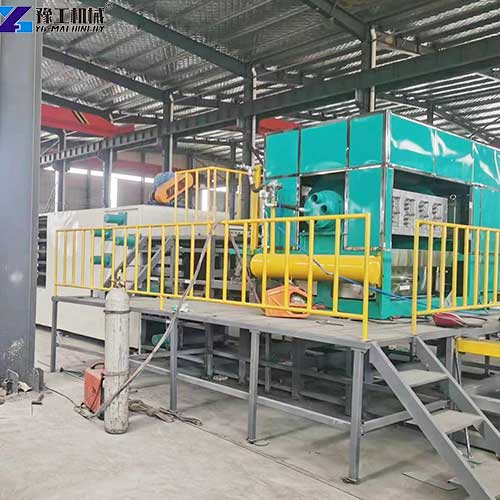
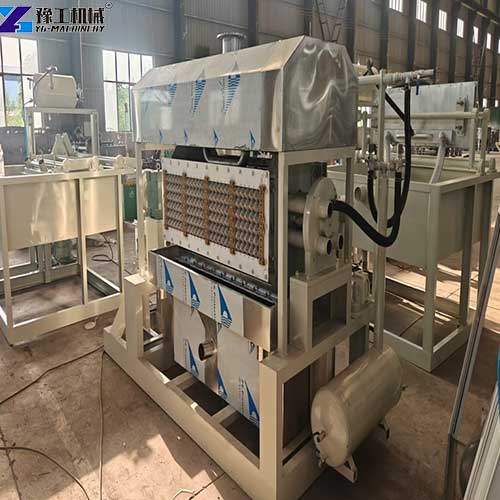
Important Questions Before Buying an Egg Tray Manufacturing Machine
How Much Paper Is Needed?
Paper consumption depends on tray weight and production capacity.
The source gives reference consumption figures for different models, but the final amount should be confirmed according to the actual finished product.
How Much Factory Space Is Required?
Space depends heavily on the drying method.
| Drying Method | Main Space Requirement |
|---|---|
| Natural Drying | Large open drying area |
| Drying Tunnel | Long production building |
| Multi-Layer Drying | Less floor space but greater building height |
Natural drying needs a large open area. Drying tunnels need long buildings. Multi-layer drying saves floor space but requires a taller building.
Is the Egg Tray Manufacturing Machine Price the Only Important Factor?
No.
The machine itself is only one part of the total project cost.
| Project Cost | What Should Be Considered? |
|---|---|
| Main Machine | Forming and production equipment |
| Auxiliary Equipment | Pulping, pumping, vacuum and air systems |
| Drying System | Natural, heated, tunnel, or multi-layer drying |
| Factory Construction | Production and drying area |
| Electricity Installation | Power supply and electrical equipment |
| Fuel System | Required when using heated drying |
| Labor | Operators and production workers |
| Transportation | Equipment transportation |
| Installation | Installation and commissioning |
| Spare Parts | Replacement components |
| Maintenance | Regular equipment maintenance |
Therefore, buyers should evaluate the complete production project rather than looking at the machine price alone.
How to Choose the Right Egg Tray Manufacturing Machine
The right machine should be selected based on the entire farm operation.
| For Small Farms | For Medium Farms | For Large Farms |
| Choose a smaller semi-automatic system when: Daily egg production is moderate Labor is available Factory space is limited Natural drying is practical The farm wants to start gradually | Consider a medium-capacity system when: Daily packaging demand is growing The farm needs more stable production Some automatic transfer is useful A drying box is practical The farm may sell additional trays locally | Consider a fully automatic production line when: Daily egg output is high Thousands of trays are required Manual handling is becoming inefficient Continuous drying is required The farm plans long-term expansion |
Egg Tray Manufacturing Machine Selection Checklist
Before contacting a supplier, prepare the following information:
| Information | Example |
|---|---|
| Number of laying hens | Your actual farm number |
| Daily egg production | Average eggs/day |
| Tray size | For example, 30 eggs/tray |
| Required trays/day | Calculated from egg output |
| Working hours | Hours/day |
| Available factory area | Production + drying space |
| Drying method | Natural / heated / tunnel / multi-layer |
| Local energy source | Electricity/gas/diesel / etc. |
| Available labor | Number of workers |
| Waste paper availability | Local supply situation |
| Future expansion | Expected production growth |
| Extra tray sales | Whether local demand exists |
Providing this information allows the supplier to recommend a production line based on the farm’s actual needs rather than simply selecting a machine model from a catalog.
Click to Inquire about Detailed Information on the Egg Tray Manufacturing Machine
Start Your Own Egg Packaging Production With YG
An egg tray manufacturing machine can help poultry farms improve packaging supply, use suitable waste paper, and build a more independent production system.
Small farms may begin with a semi-automatic machine and natural drying. Large farms may choose a fully automatic line with continuous drying, stacking, and packing.
YG can recommend a suitable solution according to:
- Number of laying hens
- Daily egg production
- Required tray capacity
- Factory size
- Local energy conditions
- Labor availability
- Investment budget
Want to know which egg tray production system fits your farm?
Send YG your daily egg production, required tray quantity, available factory space, and preferred drying method.
YG can help you evaluate the machine configuration, production capacity, drying solution, and the complete production process.
Contact YG today for machine selection, production planning, and a quotation.