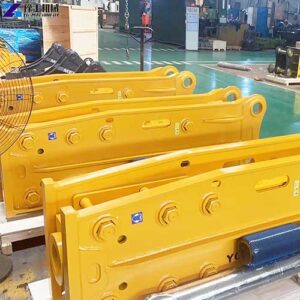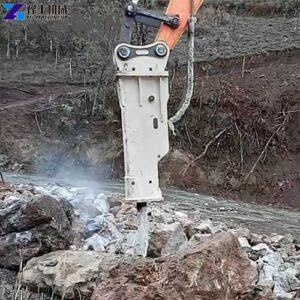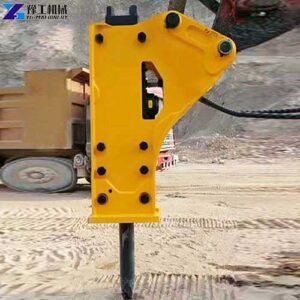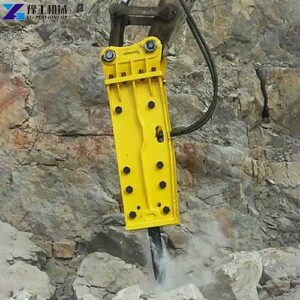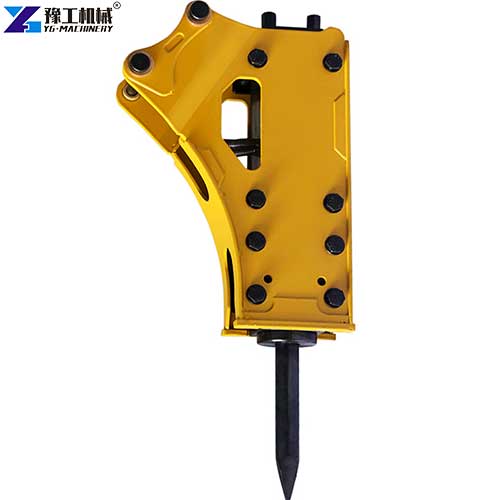
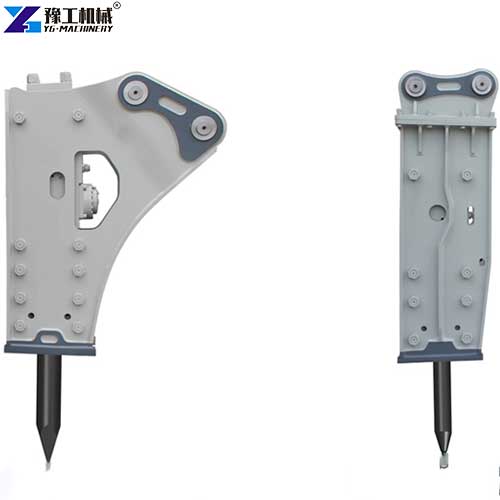
Choosing the right breaker hammer for excavator is important for efficient demolition, rock breaking, and road construction. A hydraulic breaker that is too small may struggle with hard concrete or rock, while an oversized hammer may exceed the excavator’s hydraulic capacity and place unnecessary stress on the boom, arm, and hydraulic system. So how do you select a breaker hammer for excavator? This guide answers your questions.
Whether you need a concrete breaker for excavator for demolition or a hydraulic hammer for quarrying and road repair, YG can support your solutions. Don’t hesitate to contact YG now.
Lock In Today’s Factory Price – Request a Free Quote Now
How Does an Excavator Breaker Hammer Work?
An excavator breaker hammer, also called a hydraulic breaker, is an attachment that uses hydraulic energy to deliver repeated impacts to concrete, rock, asphalt, and other hard materials.
The main working process is straightforward:
- Hydraulic power supply: The excavator sends pressurized hydraulic oil to the breaker through hydraulic hoses.
- Piston movement: The hydraulic system drives an internal piston back and forth.
- Impact transfer: The piston strikes the tool, commonly called the chisel or moil point.
- Material breaking: Repeated impacts concentrate force on a small area, creating cracks in concrete, rock, or asphalt.
- Continuous operation: The breaker repeats the impact cycle while the operator positions the tool correctly.
The impact frequency and energy vary by model. Smaller breakers generally suit lighter demolition and compact excavators, while larger models are designed for heavier carriers and demanding breaking work.
A suitable breaker hammer for an excavator must match both the physical size of the carrier and its hydraulic output. Matching only by excavator tonnage is not enough.
Lock In Today’s Factory Price – Request a Free Quote Now
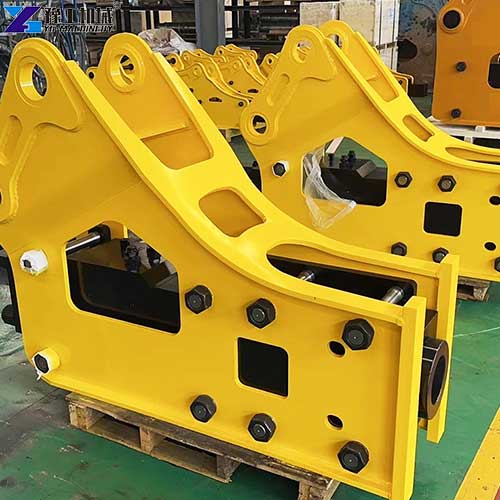
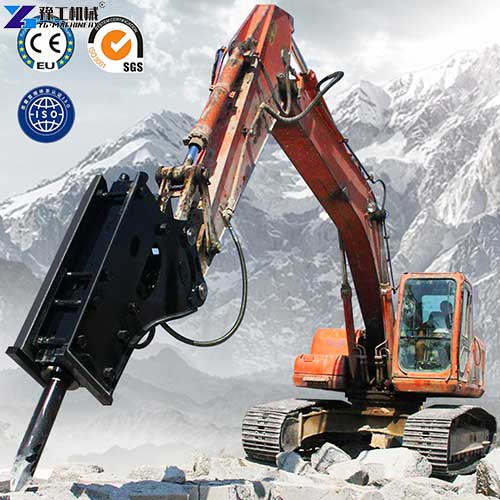
How to Choose a Breaker Hammer by Excavator Tonnage
The first step is to match the hammer to the excavator’s operating weight. The following table uses the carrier-weight ranges and technical specifications you provided. The tonnage ranges overlap because different breakers may fit the same excavator class, depending on hydraulic output and the job.
Excavator Breaker Hammer Parameters
| Excavator weight | Recommended YG models to evaluate | Hammer body weight | Hydraulic oil flow | Operating pressure |
|---|---|---|---|---|
| 1–3 tons | YG400, YG450 | 53–67 kg | 15–30 L/min | 90–120 kg/cm² |
| 2.5–5 tons | YG530, YG600 | 85–140 kg | 25–50 L/min | 90–120 kg/cm² |
| 4–7 tons | YG680 | 152 kg | 40–70 L/min | 110–140 kg/cm² |
| 6–9 tons | YG750 | 210 kg | 50–90 L/min | 120–150 kg/cm² |
| 7–14 tons | YG850 | 278 kg | 60–100 L/min | 130–160 kg/cm² |
| 10–15 tons | YG1000 | 475 kg | 80–110 L/min | 150–170 kg/cm² |
| 15–18 tons | YG1250 | 616 kg | 80–110 L/min | 150–170 kg/cm² |
| 16–26 tons | YG1350, YG1400, YG1400A | 846–952 kg | 120–180 L/min | 160–180 kg/cm² |
| 27–35 tons | YG1500 | 1,088 kg | 150–190 L/min | 160–180 kg/cm² |
| 28–36 tons | YG1550 | 1,309 kg | 200–260 L/min | 180–200 kg/cm² |
| 30–40 tons | YG1650, YG1650P, YG1750 | 1,438–1,929 kg | 200–290 L/min | 180–200 kg/cm² |
| 35–45 tons | YG1850 | 2,411 kg | 220–270 L/min | 190–220 kg/cm² |
| 40–55 tons | YG1990 | 2,626 kg | 220–290 L/min | 190–220 kg/cm² |
| 55–60 tons | Confirm the carrier and attachment combination with the supplier | — | — | — |
| 60 tons | YG2100, subject to compatibility verification | 3,396 kg | 290–350 L/min | 200–240 kg/cm² |
The model weights, flow rates, operating pressures, and carrier ranges are based on your supplied specifications. For the 55–60 ton range, the provided list does not specify a model rated for the entire range: YG1990 is listed for 40–55 tons, while YG2100 is listed for 60–80 tons.
Important Checks Before You Buy
- Check hydraulic oil flow. The excavator must supply oil within the selected hammer’s specified flow range. Too little flow can reduce performance; excessive flow can cause overheating or damage.
- Check operating pressure. The carrier’s hydraulic system must meet the hammer’s operating requirements. Do not assume that every excavator in the same tonnage class has the same hydraulic output.
- Check the attachment weight. The excavator must safely support the breaker and its mounting bracket. A heavy breaker can affect stability, lifting capacity, and the load on the boom and arm.
- Check mounting compatibility. Confirm the bracket, pin dimensions, hose connections, and any required control valve or accumulator arrangement.
- Consider the actual job. Breaking thin concrete slabs is different from breaking large blocks of hard rock. The tool and breaker size should suit the material and required production rate.
If you are comparing a hydraulic hammer for excavator for sale, request the full specification sheet by phone/whatsapp: +86 139 3718 3205.
Lock In Today’s Factory Price – Request a Free Quote Now
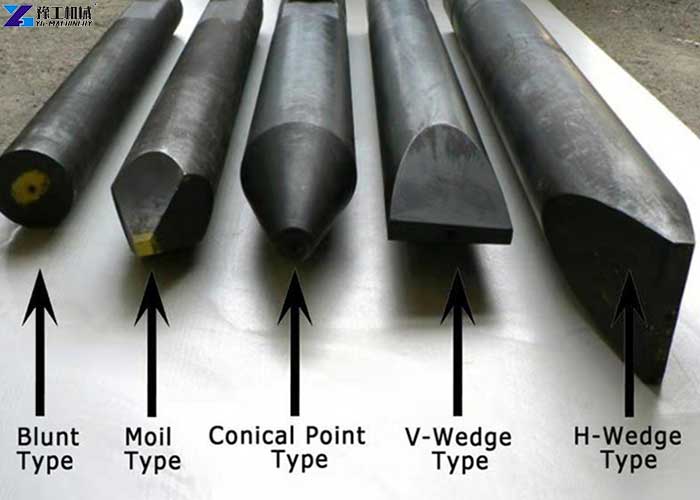
Which Chisel Should You Choose for Different Jobs?
| Working Condition | Recommended Chisel | Why Choose It? |
|---|---|---|
| Large concrete blocks | Blunt Type | Suitable for secondary breaking and reducing oversized pieces |
| General building demolition | Moil Type | Versatile for common concrete and masonry work |
| Reinforced concrete walls and floors | Moil Type | Concentrated impact helps initiate cracks in concrete |
| Hard rock excavation | Conical Point Type | Concentrates impact near the tip |
| Quarry secondary breaking | Blunt or Moil Type | Choice depends on block size and fracture requirements |
| Foundation rock breaking | Conical Point or Moil Type | Useful for initiating fractures in dense materials |
| Road and pavement demolition | Moil or H-Wedge Type | Select based on whether general fracture or linear breaking is needed |
| Concrete trenching | V-Wedge Type | Helps direct breaking along a narrower path |
| Cable and pipe trench excavation | V-Wedge Type | Can support directional breaking where site conditions allow |
| Concrete channel cutting | V-Wedge or H-Wedge Type | Wedge geometry can help create a more directional fracture |
| Masonry wall removal | Moil Type | Suitable for general localized demolition |
| Oversized stone reduction | Blunt Type | Useful for breaking large fragments into manageable pieces |
| Concrete slab edge removal | H-Wedge Type | Suitable for selected linear breaking tasks |
| Mixed demolition materials | Moil Type | A practical general-purpose option |
Lock In Today’s Factory Price – Request a Free Quote Now
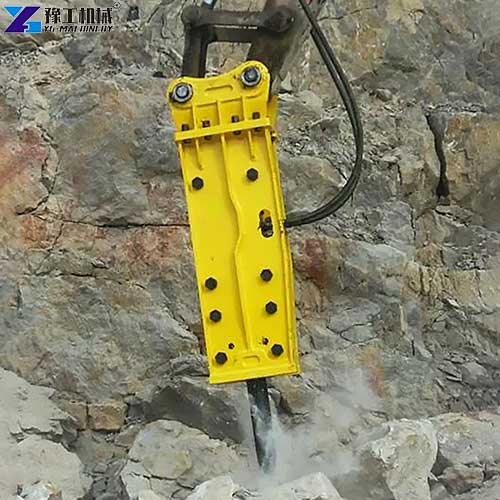
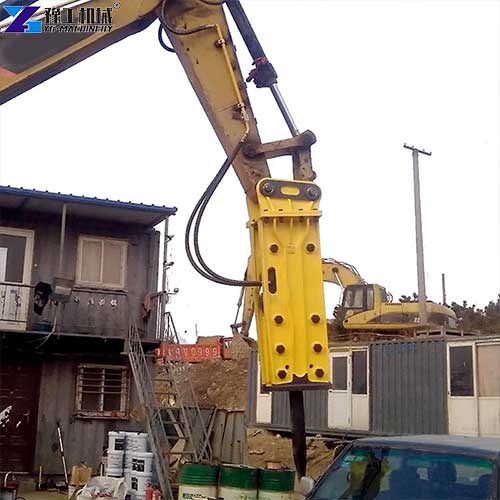
Daily Maintenance Tips for an Excavator Breaker Hammer
Regular maintenance helps reduce unexpected downtime and extends the service life of your breaker. Always follow the manufacturer’s instructions for the specific model.
- Check Hydraulic Hoses and Connections: Inspect hoses, fittings, and couplers for leaks, cracks, looseness, or damage. Stop operation and relieve hydraulic pressure before performing maintenance.
- Inspect the Chisel and Retaining Parts: Check the tool for abnormal wear, cracks, or deformation. Inspect retaining pins and related components according to the maintenance schedule, and replace damaged parts promptly.
- Monitor Hydraulic Oil Temperature: Excessive heat can indicate an unsuitable flow setting, a hydraulic problem, or prolonged operation under unsuitable conditions. Check the excavator and breaker requirements if temperatures rise abnormally.
- Lubricate the Tool as Required: Apply the specified grease at the recommended intervals. Proper lubrication helps reduce friction between the chisel and its guide bushings. Use the lubricant and procedure recommended by the manufacturer.
- Check for Abnormal Noise or Impact Changes: If the hammer suddenly loses impact force, produces unusual noise, or shows signs of leakage, stop and inspect it. Continuing to operate a damaged breaker may increase repair costs.
Common Operating Mistakes to Avoid
- Running the breaker outside its specified hydraulic flow or pressure range.
- Using the chisel to push, lift, or pry heavy material.
- Operating continuously at one point when the material is not breaking.
- Using a worn or damaged chisel.
- Ignoring hydraulic leaks or unusual changes in impact performance.
- Carrying out maintenance before safely shutting down the machine and relieving hydraulic pressure.
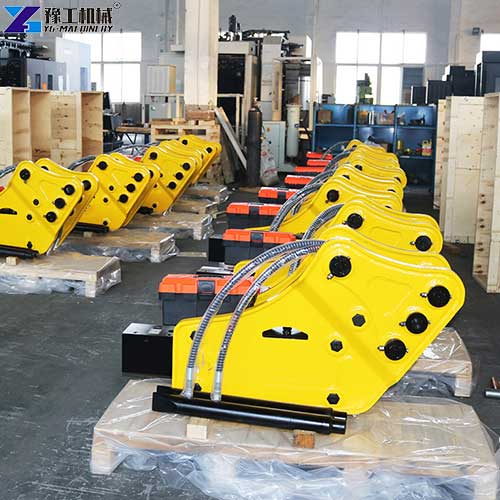
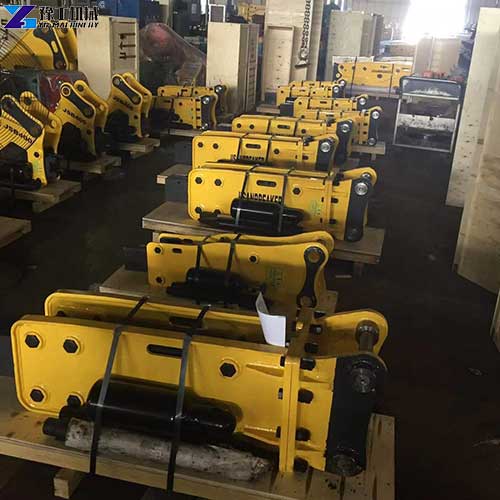
Want to Get the Latest Product Information? Contact YG for a quote
Choosing the right breaker hammer for an excavator starts with three essential questions: How heavy is your excavator? What hydraulic flow and pressure can it provide? What material do you need to break?
YG Machinery offers a range of hydraulic breaker models for different carrier sizes and construction applications. To help identify a suitable model, share your excavator brand and model, operating weight, hydraulic flow, operating pressure, and main application.
Whether you need a concrete breaker for an excavator for demolition or are searching for hydraulic hammers on the market, contact YG Machinery today to discuss your project and find a suitable excavator breaker hammer for your working conditions.