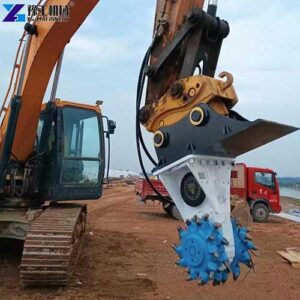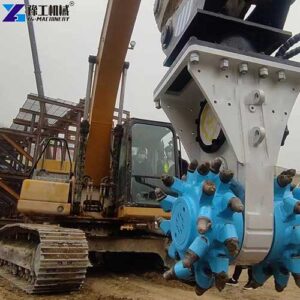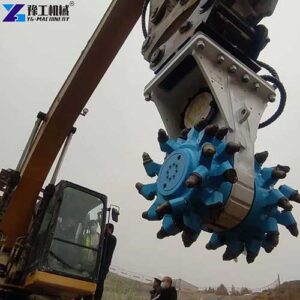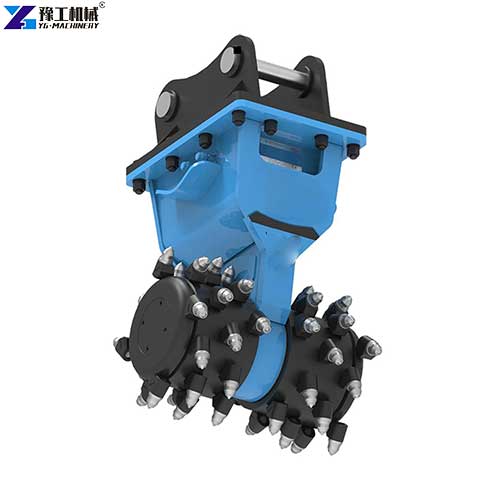
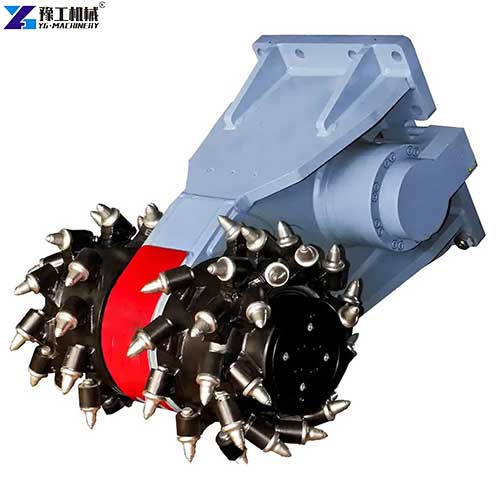
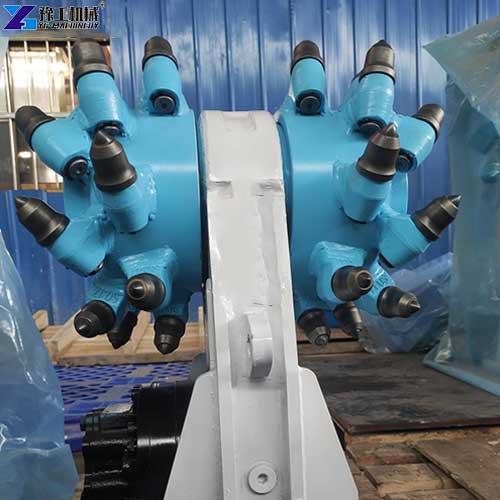
A milling head for excavator, also known as an excavator drum cutter, is a hydraulic attachment designed to cut, mill, grind, and shape hard materials. It connects to an excavator and uses the machine’s hydraulic power to rotate a drum fitted with wear-resistant cutting picks. A drum cutter attachment can work on materials such as rock, concrete, asphalt, compact soil, and selected industrial residues, depending on the attachment configuration and material conditions. It is commonly used in road renovation, trench excavation, tunnel construction, mining, slope shaping, and foundation work.
YG offers different drum cutter designs, including horizontal, vertical, and chain-type models. Each design serves different working conditions. For example, horizontal drum cutters are suitable for general milling and surface removal, while vertical models can be useful in narrower or more restricted working areas. Please contact YG for more details about the milling head for excavator.
Get 12-Month Warranty & 24/7 Technical Support – Learn More
Milling Head for Excavator Parameters
| Parameter Items | YG-060 | YG-150 | YG-200 | YG-350 | YG-450 | Dual-motor Milling Machine |
| Applicable Models | Within 6T | 8-18T | 20-35T | 30-40T | 40-50T | 20-35T |
| Total Weight (kg) | 270 | 650 | 1000 | 1550 | 1800 | 700 |
| Milling Width(mm) | 450 | 680 | 720 | 950 | 1050 | 745 |
| Milling Head Diameter (mm) | 370 | 470 | 510 | 650 | 650 | 470 |
| Number of Blades | 44 | 44 | 44 | 44-66 | 44-66 | 44 |
| RPM(r/min) | 0-150 | 0-100 | 0-85 | 0-75 | 0-75 | 75 |
| Traffic(L/min) | 40-60 | 120 | 200 | 320 | 380 | 200 |
| Maximum Pressure (MPa) | 30 | 30 | 30 | 30 | 30 | 30 |
| Maximum Torque (N.m) | 1500 | 6300 | 10600 | 23300 | 25000 | 10000 |
Get 12-Month Warranty & 24/7 Technical Support – Learn More
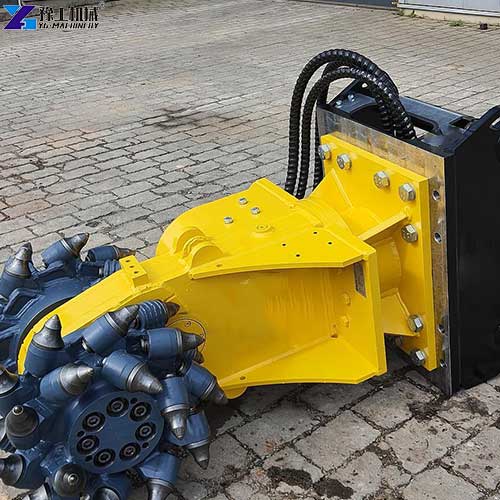
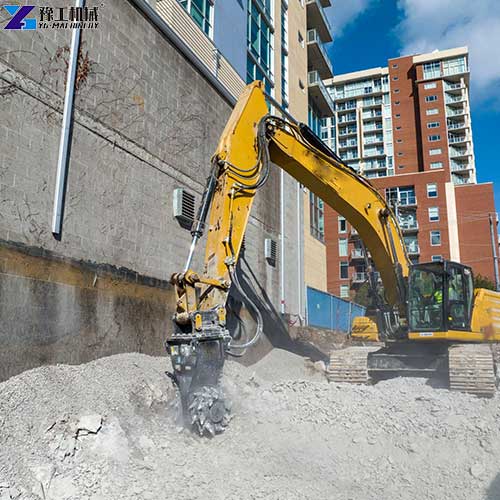
I: How Does a Milling Head for Excavator Work? 4 Steps
Understanding the working principle helps contractors decide whether a milling head is suitable for their projects.
- Hydraulic Power Transmission: The excavator’s hydraulic system sends pressurized hydraulic oil through auxiliary lines to the attachment’s hydraulic motor. The motor converts hydraulic energy into rotational movement.
- Drum Rotation and Torque Output: The motor drives the cutting drum, while the transmission system provides the rotation and torque required for milling. The drum carries multiple cutting picks arranged around its surface.
- Continuous Cutting and Material Removal: As the operator moves the excavator arm, the rotating picks contact the target material. They gradually cut and break away small pieces of rock, concrete, or other suitable materials. The operator controls the working position and cutting movement to achieve the required trench shape, surface profile, or excavation depth.
- Controlled Milling and Finishing: The operator adjusts the feed movement and cutting depth according to the material and project requirements. For jobs that require a specific profile, controlled milling may reduce the need for additional trimming compared with rough impact breaking.
For more information, see the YG rotary drum cutter.
Get 12-Month Warranty & 24/7 Technical Support – Learn More
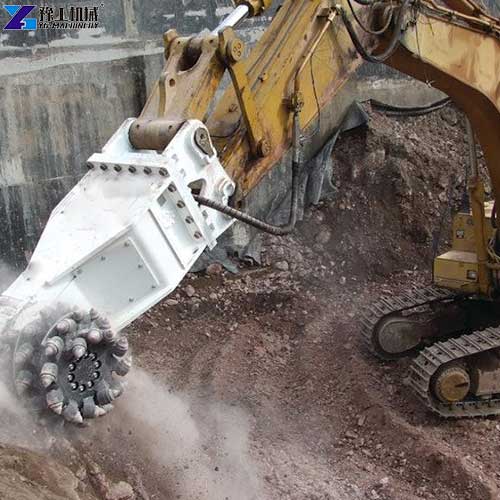
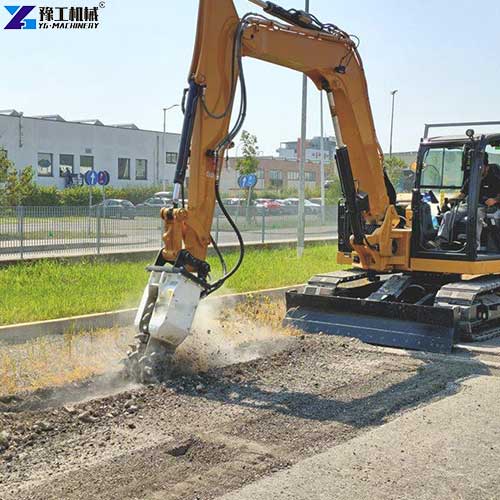
II: What Can a Milling Head for Excavator Actually Do for You? 5 Benefits
A milling head for excavator is not just another rock-breaking tool. It gives you a completely different way to handle hard materials — one that puts precision and control first.
1. You Get Precise Control — Not Just Breaking Power
A breaker hammer shatters concrete and rock fast, but the result is often rough and uneven. A milling head removes material gradually and precisely, letting the operator control exactly where to cut and how deep to go.
What this means for you: No more oversized cuts. No more expensive secondary trimming. You hit your project dimensions the first time — on narrow trenches, tunnel profiles, concrete surface removal, and any job where digging too much means extra work.
2. Less Vibration, Less Trouble Nearby
Because a drum cutter mills by rotating instead of hammering again and again, it produces noticeably less impact vibration than a hydraulic breaker under the same conditions.
What this means for you: You can work closer to existing structures, buried utilities, and sensitive areas with far less risk of disturbance. (Note: milling still makes noise, dust, and vibration, but the impact is significantly lower.)
3. One Excavator, Many Jobs
Fit a drum cutter on a compatible excavator, and suddenly that same machine can handle trench milling, rock shaping, road renovation, and concrete trimming — just by changing the attachment.
What this means for you: You take on more types of work without buying a separate specialized machine for each task. One excavator becomes a multi-purpose profit center.
4. It Works Where Big Equipment Can’t Go
Some milling head designs reach into narrow trenches and confined spaces where large cutting machines simply can’t fit. Vertical drum cutters are especially useful for tight or deep working areas.
What this means for you: You can take on complex urban jobs, utility installations, and infrastructure maintenance that competitors have to turn down.
5. It Can Lower Your Total Project Cost
The purchase price is only one piece of the puzzle. When you add up cutting-pick wear, hydraulic needs, maintenance, labor, downtime, and secondary finishing — a milling head often comes out ahead. Because it reduces rework and lets one excavator do several jobs, it improves your overall project economics.
What this means for you: Less wasted work, better equipment utilization, and a stronger profit margin on every job.
Get 12-Month Warranty & 24/7 Technical Support – Learn More
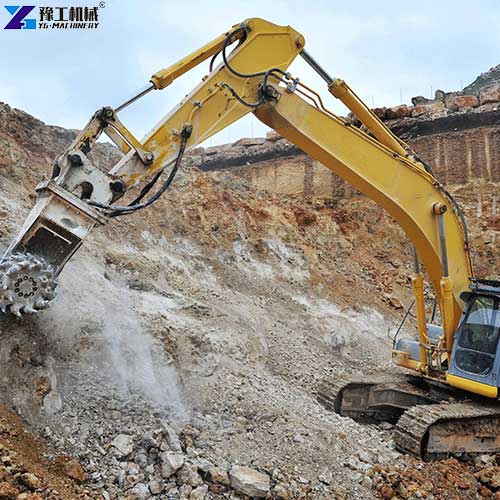
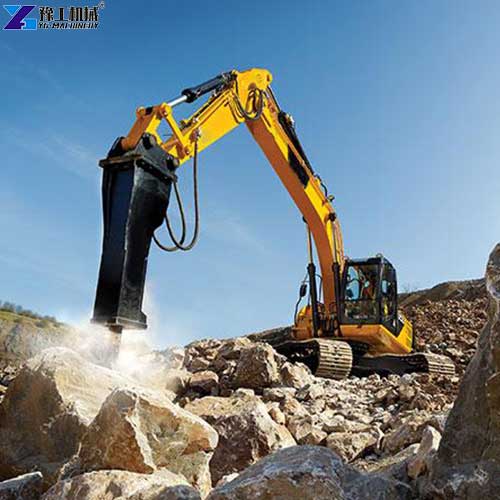
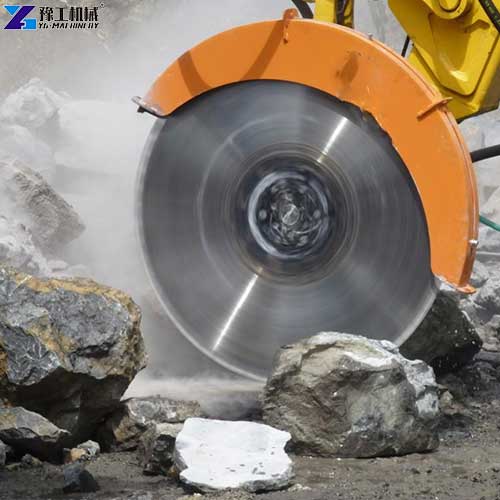
III: Milling Head vs. Excavator Breaker Hammer vs. Rock Saw
These attachments all help excavators work with hard materials, but their working methods and best applications are different.
| Comparison | Milling Head for Excavator | Excavator Breaker Hammer | Excavator Rock Saw |
|---|---|---|---|
| Working principle | Continuous rotary milling | Repeated hydraulic impact | Rotating saw blade cuts material |
| Main purpose | Milling, shaping, trenching, surface removal | Breaking and fragmenting hard materials | Straight, controlled cutting |
| Typical materials | Rock, concrete, asphalt, compact material | Concrete, rock, masonry, pavement | Rock, reinforced concrete, asphalt, suitable stone |
| Finished result | Milled surface or shaped profile | Irregular broken pieces | Defined cutting line or kerf |
| Precision | Good for controlled material removal | Generally less precise for finished profiles | Best suited to planned linear cuts |
| Vibration characteristics | Generally lower impact vibration than a breaker | Higher impact vibration | Generally lower impact vibration than a breaker |
| Typical applications | Tunnel trimming, trench milling, road renovation | Demolition, concrete breaking, rock fragmentation | Rock cutting, concrete sawing, pavement grooving |
When Should You Choose a Milling Head?
Choose a milling head when you need to remove material progressively, shape a surface, or excavate a trench with greater control.
Typical examples include milling hard material from a narrow trench, trimming tunnel linings, removing selected concrete layers, and shaping rock surfaces.
When Is an Excavator Breaker Hammer Better?
An excavator breaker hammer is often the more practical choice when the primary task is to fracture and remove large volumes of hard concrete or rock.
For example, a contractor demolishing a thick concrete slab may prioritize impact force and fragmentation over a smooth finished surface.
See the YG excavator breaker hammer.
When Should You Use a Rock Saw?
A rock saw is better suited to jobs that require straight cuts or defined cutting lines, such as cutting rock blocks, making pavement grooves, or separating sections of reinforced concrete.
A saw is not a direct replacement for a milling head when the task requires broad surface removal or continuous trench milling.
Explore the YG excavator rock saw.
Get 12-Month Warranty & 24/7 Technical Support – Learn More
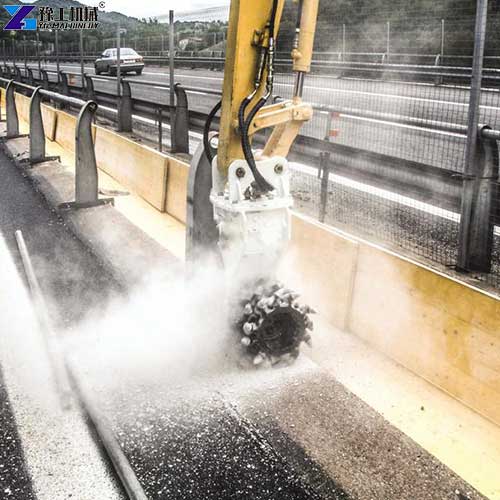
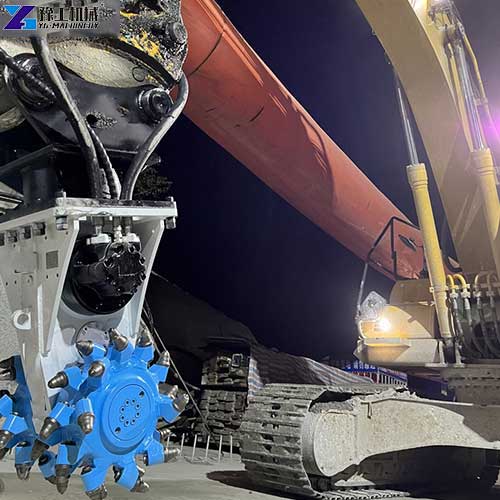
IV: Customer Feedback about YG Milling Head for Excavator
A Road Renovation Contractor Needs More Controlled Milling
A contractor working on road renovation projects overseas needs to remove damaged concrete and hard material around existing road sections. Using a breaker hammer can fracture the material quickly, but some areas require more controlled removal to limit damage to the surrounding surface.
The contractor considers a milling head for excavator because its rotary cutting method is better suited to progressive material removal and surface shaping.
After confirming the excavator’s hydraulic flow, operating pressure, attachment weight, and the required milling width, the contractor selects a compatible drum cutter configuration.
Customer feedback:
“We needed an attachment that could remove hard material while giving our operators better control over the finished surface. The drum cutter’s rotary milling action was useful for selected road renovation and trimming tasks. Choosing the correct model for our excavator and maintaining the cutting picks were important for stable operation.”
Get 12-Month Warranty & 24/7 Technical Support – Learn More
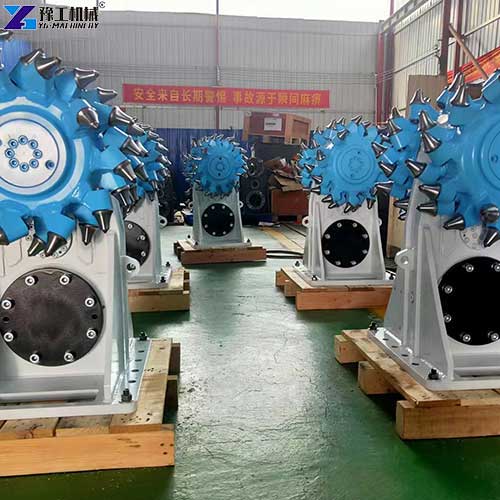
V: How to Choose the Right Milling Head for Excavator
Before buying a milling head, check the following points:
- Excavator tonnage: Confirm that the attachment weight and mounting configuration suit your excavator.
- Hydraulic flow and pressure: Match the attachment’s requirements to the excavator’s auxiliary hydraulic circuit.
- Material type and hardness: Rock, concrete, asphalt, and abrasive materials can require different operating approaches and cutting-pick maintenance.
- Required milling width and depth: Select a drum size and design that match the working profile.
- Working environment: Consider narrow trenches, tunnel access, underwater work requirements, dust, noise, and nearby structures.
- Maintenance and operating costs: Ask about cutting-pick replacement, service requirements, and spare-parts availability.
YG’s published drum cutter range includes models for different excavator sizes and milling requirements. Please review the YG drum cutter attachment range to compare the available configurations.
Choose YG Factory Direct Machine Milling Head-Improve Excavator Versatility
A milling head for excavator is a practical attachment for contractors who need controlled material removal, rock shaping, trench milling, or surface trimming. Its rotary cutting method differs from the impact action of an excavator breaker hammer and the linear cutting action of a rock saw. The right attachment can improve control, expand your service capabilities, and reduce avoidable finishing work.
Looking for an excavator drum cutter for road renovation, tunnel construction, rock excavation, or utility trenching?
Contact YG Machinery today.